
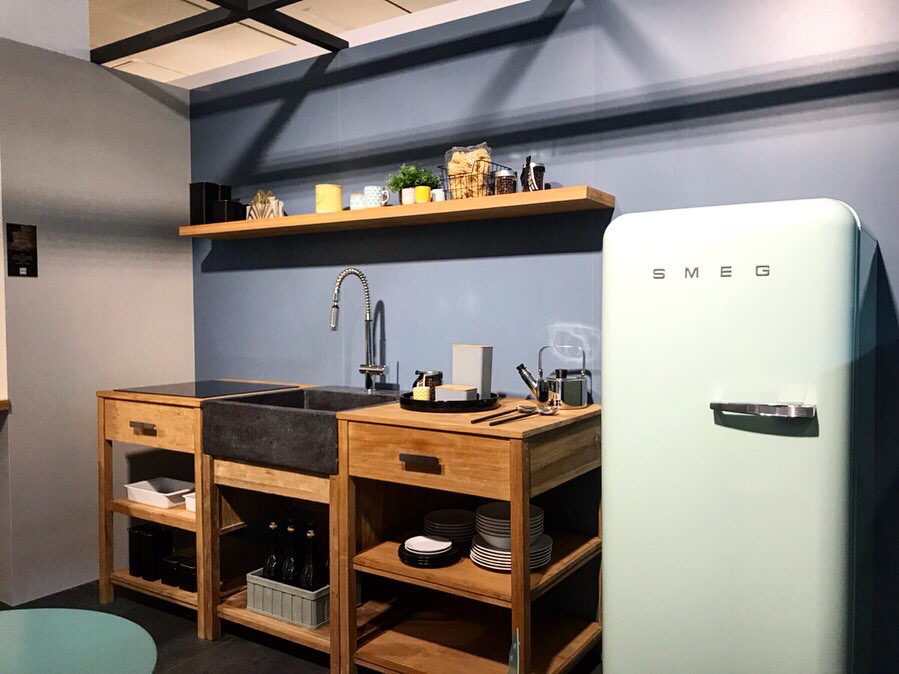
Large-format coloured porcelain stoneware slabs: sizes and decorations
Technological development and significant investments in production facilities have also made it possible to achieve increasingly larger slab sizes, reaching truly impressive formats (120×120 cm, 120×240 cm, 120×280 cm, 160×160 cm, 160×320 cm, and more). But where, then, does the real revolution lie?
The true breakthrough in porcelain stoneware—whose evolution has gone hand in hand with the growth of production technologies—lies in its decorative potential. Digital printing, with ever-higher levels of definition and quality, represents the real added value of this extraordinarily versatile material. Porcelain stoneware now offers a vast range of aesthetic options: stone effect, resin effect, plaster effect, wood effect, metal effect, wallpaper effect, all kinds of graphics and illustrations, and now also solid, through-body coloured shades, such as air-force blue, milk white, cream, lilac, forest green, petrol, mustard, sage, and many others.
Large-format coloured porcelain stoneware slabs for bathrooms
Coloured large-format slabs are ideal for modern, minimalist bathrooms, where broad surfaces make it possible to create continuous wall coverings, almost completely eliminating inconvenient and unsightly grout joints. Moreover, these new pastel shades allow spaces to be furnished without overloading the walls with decorative effects. A soft, delicate colour can easily replace paints, enamels and wallpaper, freeing the user from demanding and recurring maintenance.
Lastre in grès colorate per una doccia... green!
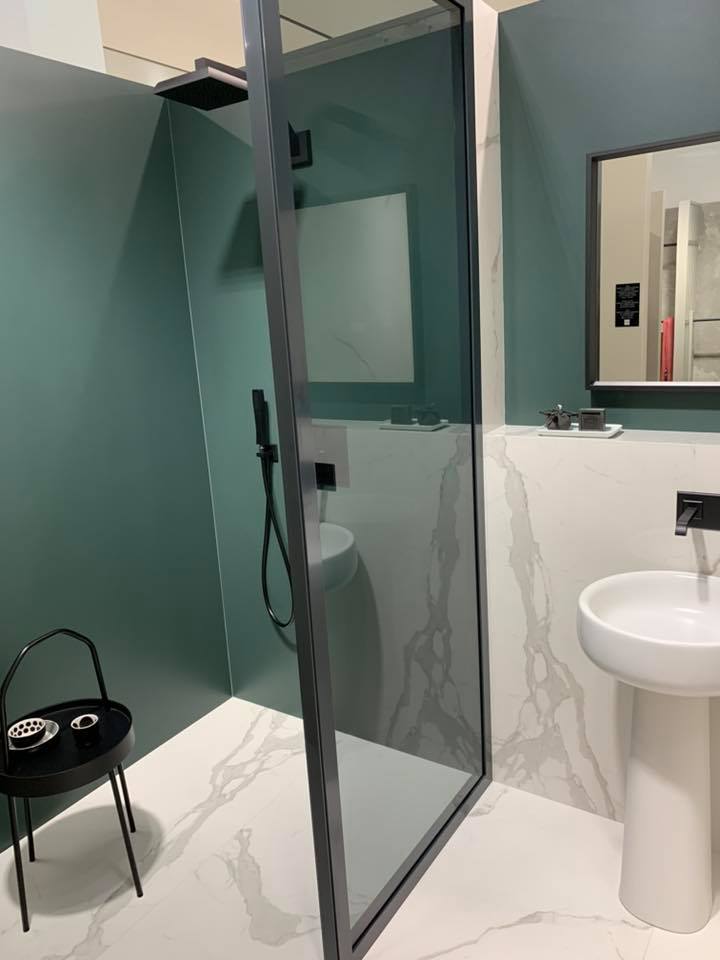
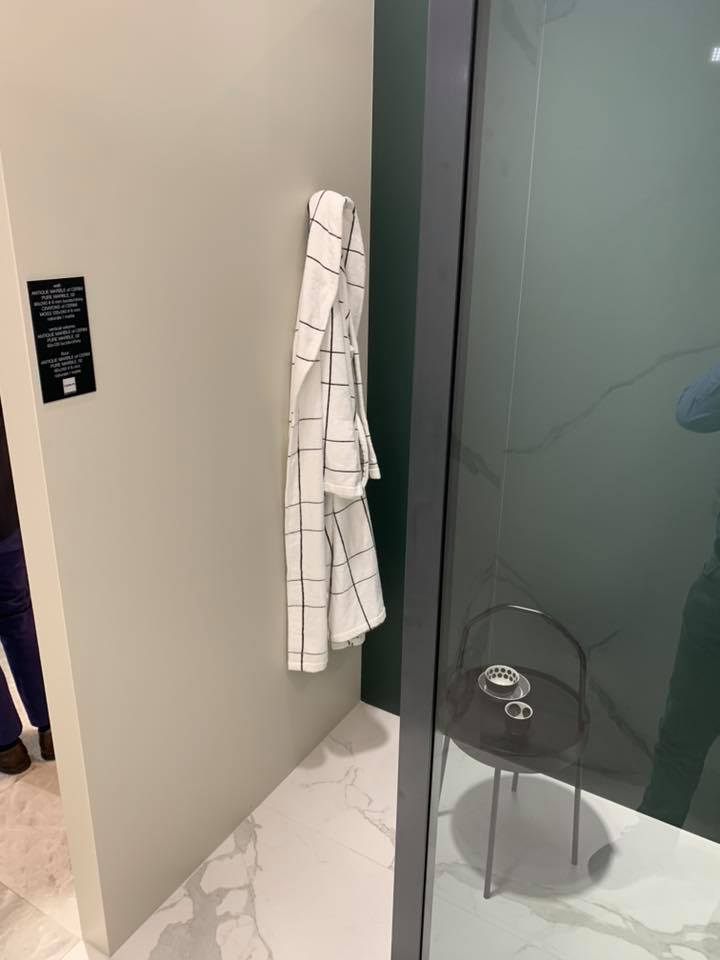
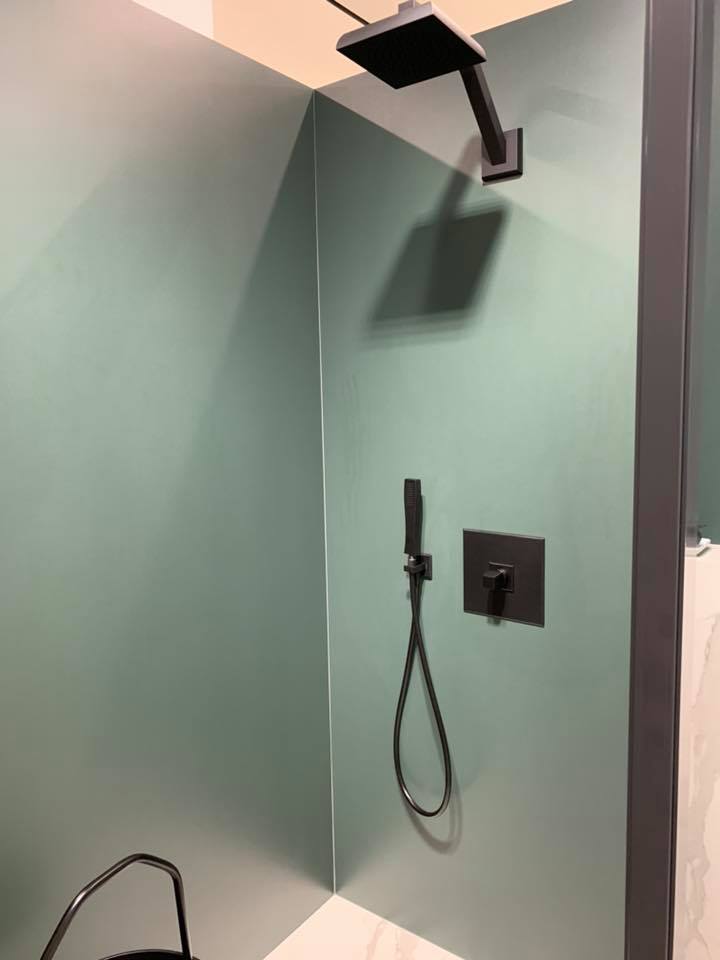
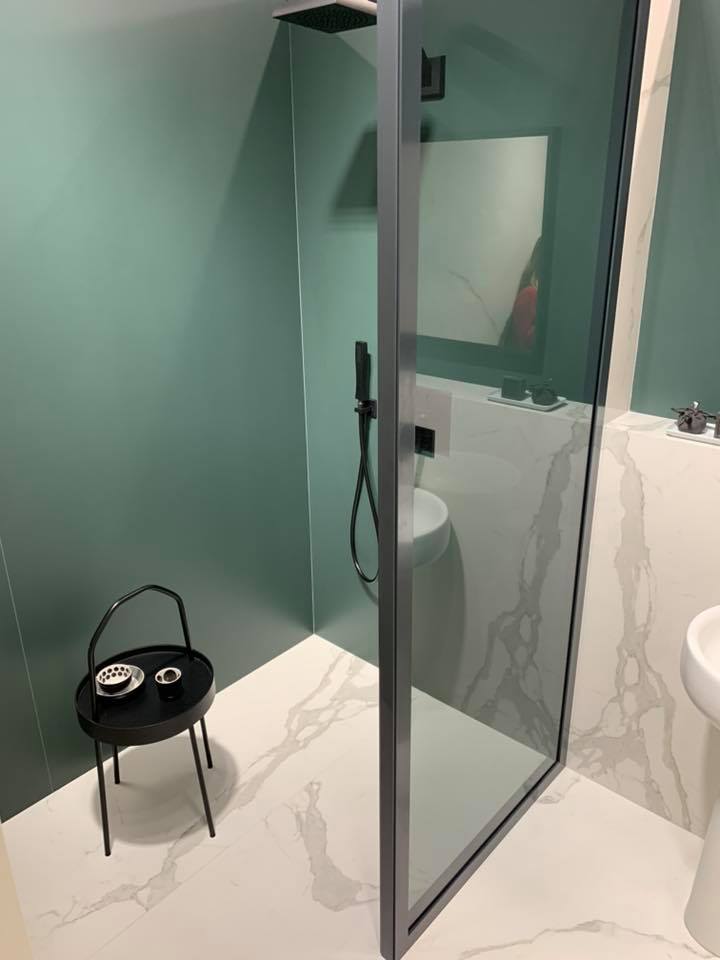
Il colore verde di queste piastrelle di grande formato, regala un tocco di modernità e anticonformismo al bagno.
Coloured porcelain stoneware slabs: through-body or glazed?
Two different production processes
Porcelain stoneware is made from a blend of clays, feldspars and finely ground minerals, reduced to powder and then pressed (or continuously compacted) to obtain a raw slab, which is subsequently fired at very high temperatures. From this production process, it is possible to obtain through-body coloured slabs or slabs with colour applied only to the surface. In the first case, the powders themselves are coloured before being pressed and fired. In the second case, the colour is provided by a surface glaze that covers the body of the tile.
The differences between the two systems
In the first case, as mentioned, pigments are incorporated into the body of the material: the colour runs through the entire thickness of the slab, ensuring greater chromatic continuity even in the presence of chips, cuts and, above all, when the edges of the slab are left exposed. In the second case, the colour is entrusted to a surface glaze, often applied using digital technology. This solution offers great decorative freedom but makes the material more sensitive to surface wear and chipping, where the colour of the underlying body may become visible.
Which one should you choose?
In practical terms, through-body coloured porcelain stoneware is generally more tolerant during processing, on exposed edges and in more “demanding” applications, while glazed porcelain stoneware requires greater care during installation and fabrication, especially when the project involves cuts, corners and exposed details. Through-body coloured porcelain stoneware is more expensive and typically offers more muted, less saturated colours.
Lastre colorate per un grande spazio doccia
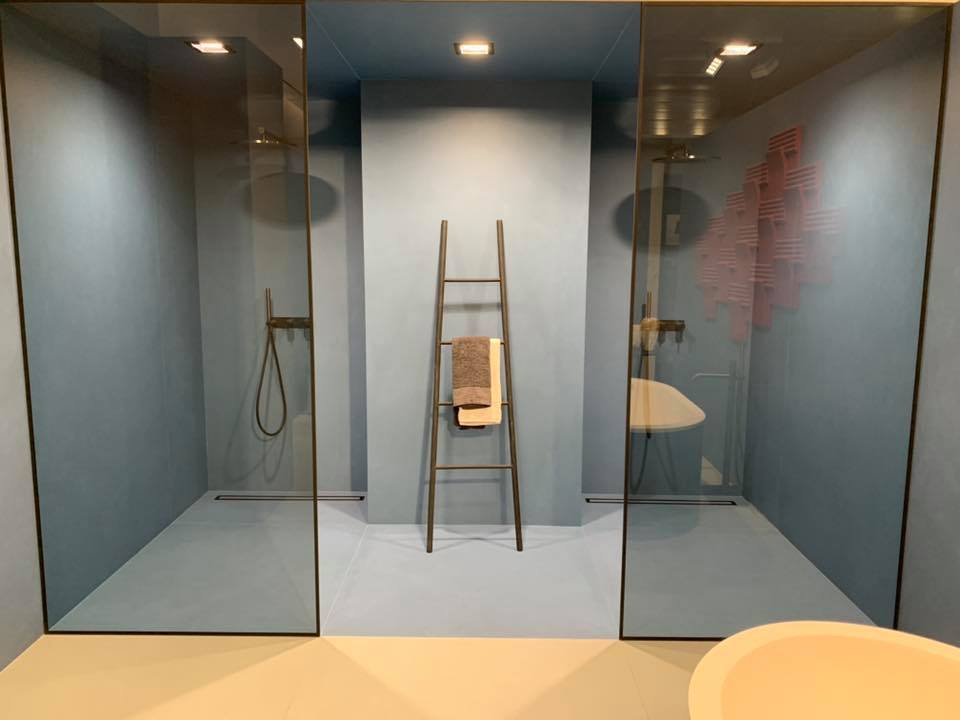
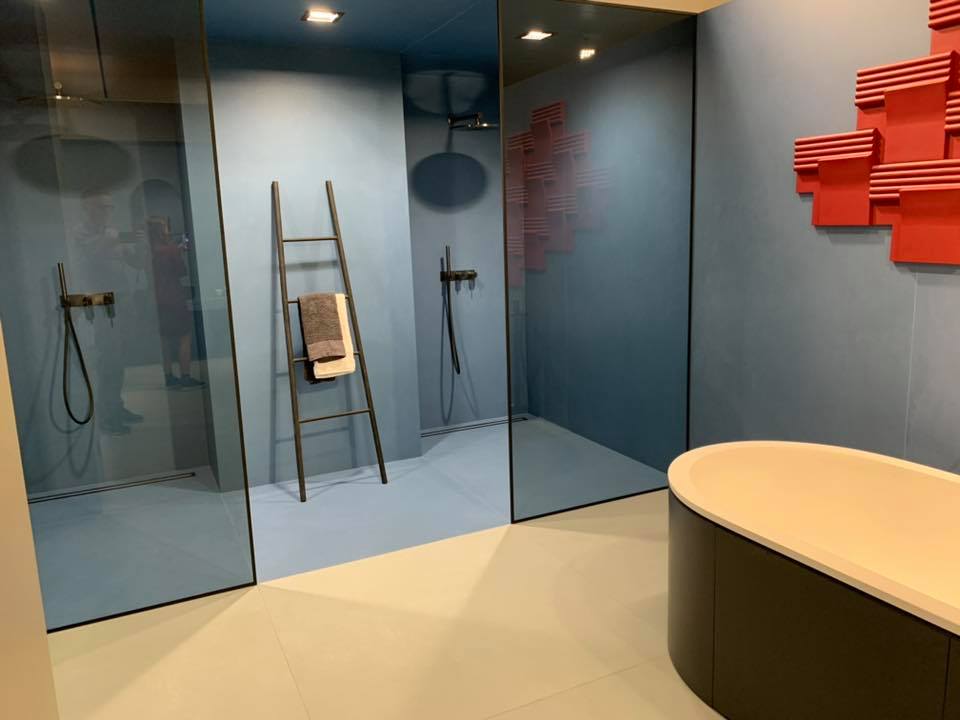
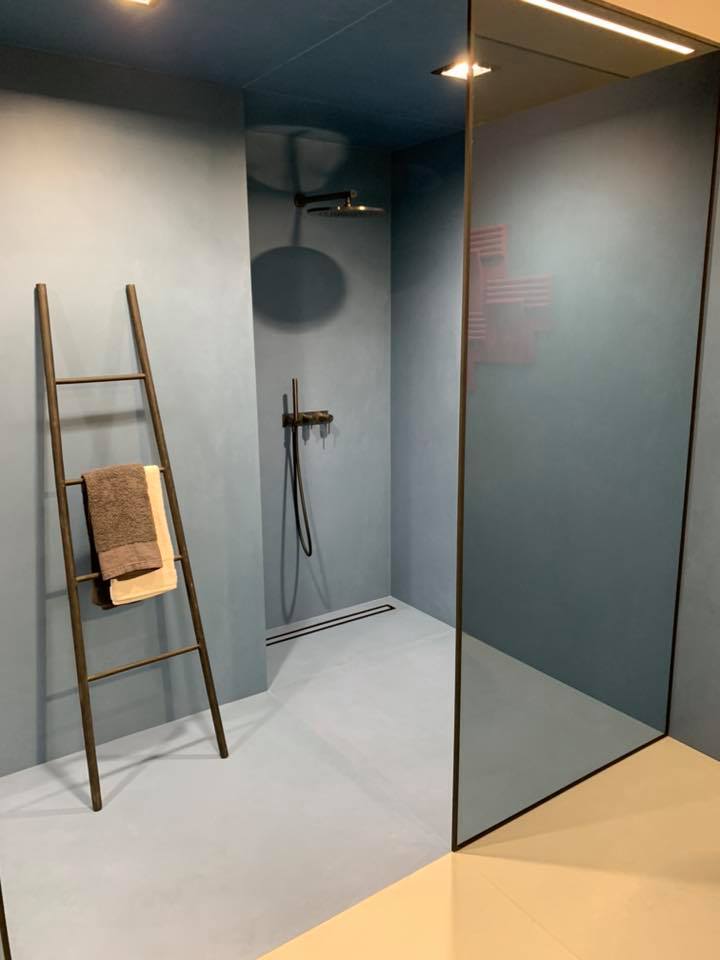
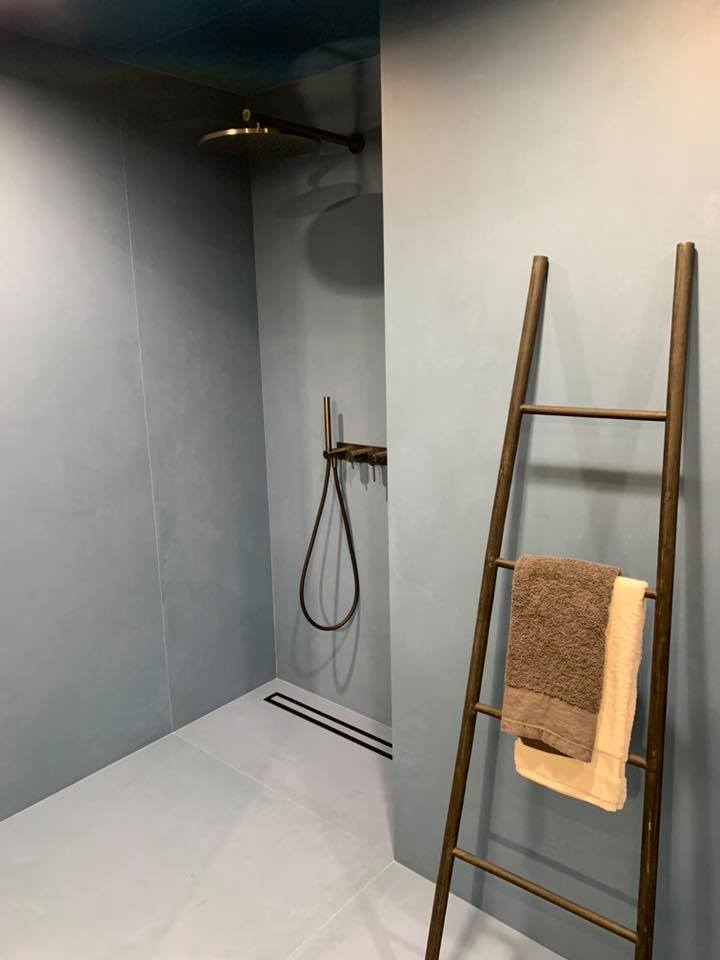
Piastrelle di grande formato di colore azzurro baltico per questo doppio spazio doccia in un grande bagno, ambientato in show room.
Coloured porcelain stoneware slabs and misplaced expectations
There is no RAL in the world of ceramic slabs
When it comes to large-format coloured porcelain stoneware slabs, it is important to clarify that the final colour is never an “industrial standard” colour such as a RAL shade or a paint tint. Porcelain stoneware is fired in kilns at extremely high temperatures, and its colour results from the interaction between the body composition, pigments, firing atmosphere and thermal curve. This complex process makes an absolutely identical and mathematical colour reproduction impossible.
Differences between samples and production batches
For the same reasons, tonal variations may occur between the sample seen in the showroom and the delivered production batch, as well as slight differences between a batch produced today and one manufactured several months later. These variations should not be considered defects, but rather an intrinsic characteristic of ceramic materials.
Shade variations and intentional colour movement
In some projects, these differences become a design asset: subtly shaded, vibrant surfaces or intentional colour variations add depth and natural character to large surfaces, making the cladding less “flat” and more material-rich—especially when colour is used as an architectural element rather than as a simple finish.
Lastre decorate lucide in un bagno
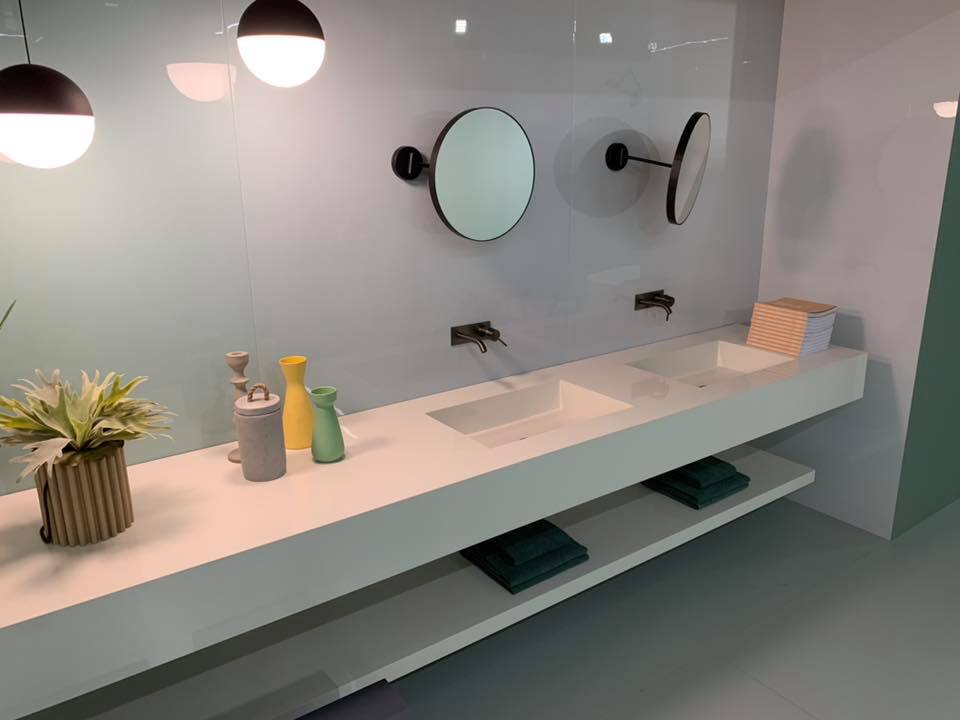
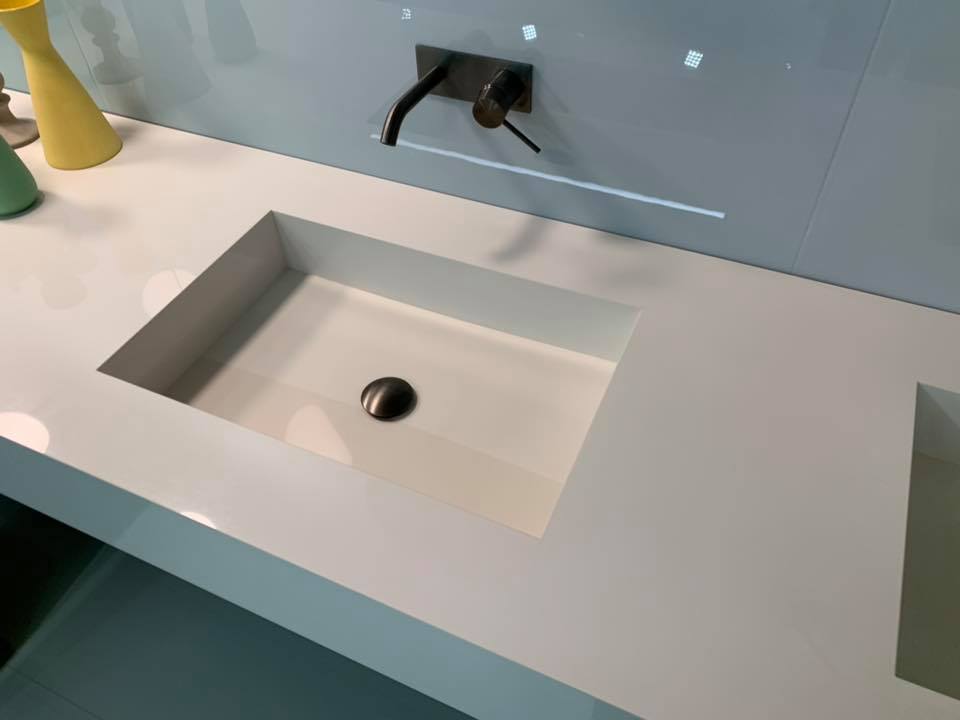
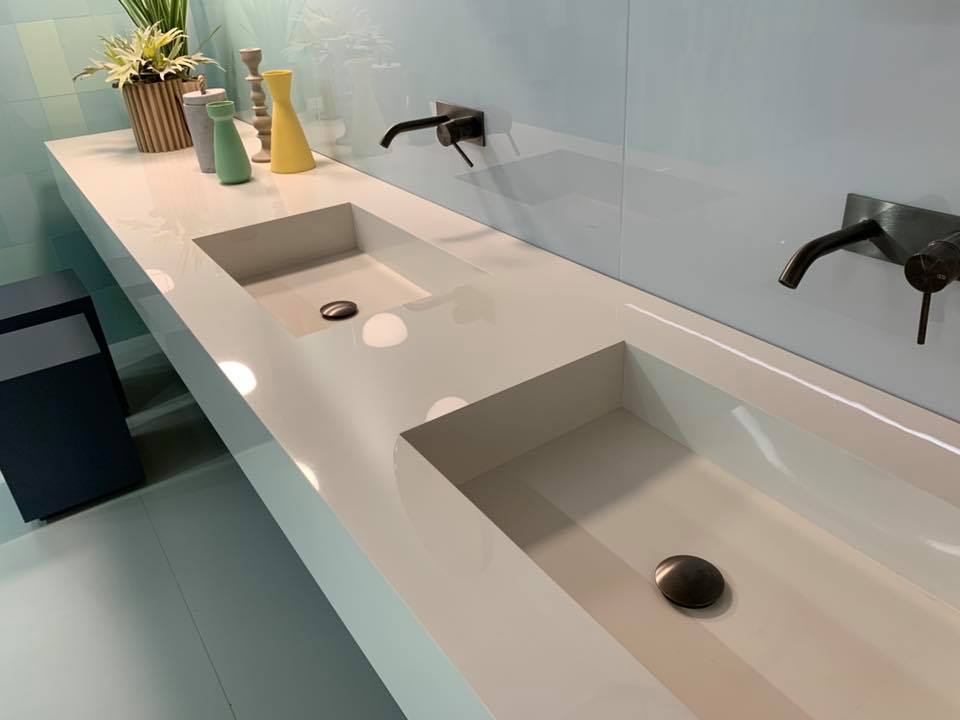
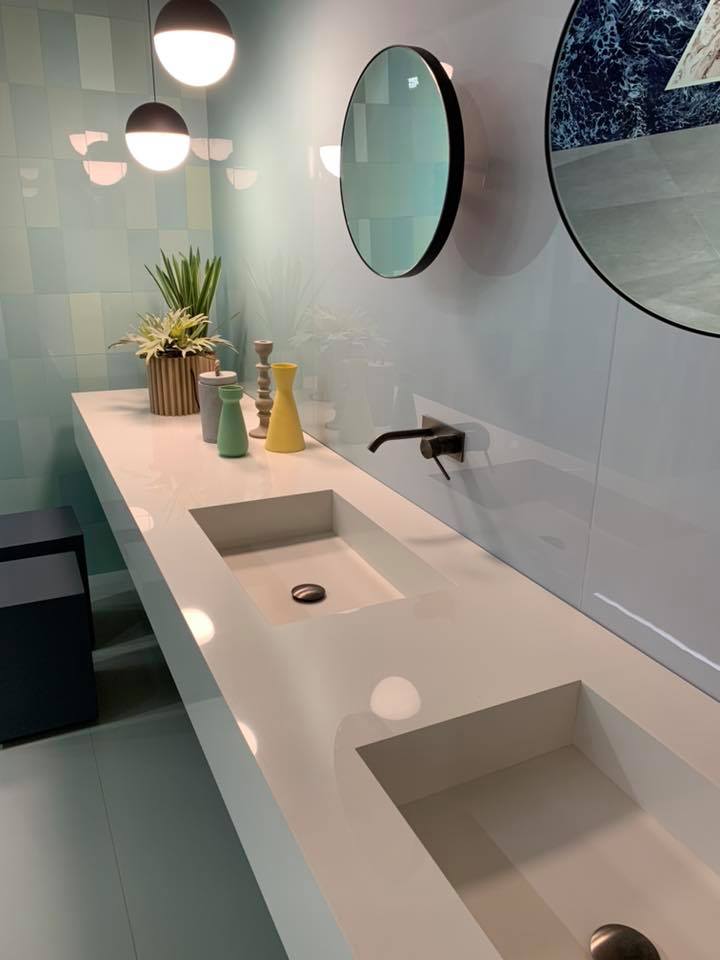
Se oltre al grande formato, cerchi delle piastrelle colorate e con la superficie lucida... ce le abbiamo! Eccole, ambientate in un bellissimo bagno moderno.
Colour perception on large-format coloured porcelain stoneware slabs
Colour perception based on different surface finishes
The surface finish of a large ceramic slab has a decisive impact on the perception of both colour and space. Matt or natural finishes absorb more light, delivering a fuller, deeper and more stable colour, ideal for bright environments or for those seeking a sober, material-oriented effect. Lapped or semi-polished surfaces, on the other hand, partially reflect light, creating a balance between chromatic depth and brightness, with more dynamic and “lively” surfaces. Fully polished, mirror-like slabs further amplify reflection, making colours appear more intense and sometimes lighter, but also more sensitive to lighting conditions.
Natural light and artificial light
Natural light, which changes throughout the day, can significantly alter colour perception: a light, glossy slab may appear brighter and more airy in the morning, while in the evening, with raking light, it can reveal unexpected reflections and depth. Artificial light, by contrast, allows for greater control but introduces additional variables related to colour temperature (warm, neutral or cool), which can warm up or cool down the tone of the slab.
Light, colour and room dimensions
For the end user, all of this translates into a perception of space that is strongly influenced by the choice of surface finish: reflective finishes tend to visually enlarge spaces, while matt ones make them feel more intimate and contained, confirming that the choice of a slab is never purely chromatic, but always also a matter of light and spatial perception.
Rivestimento in camera con grandi lastre colorate
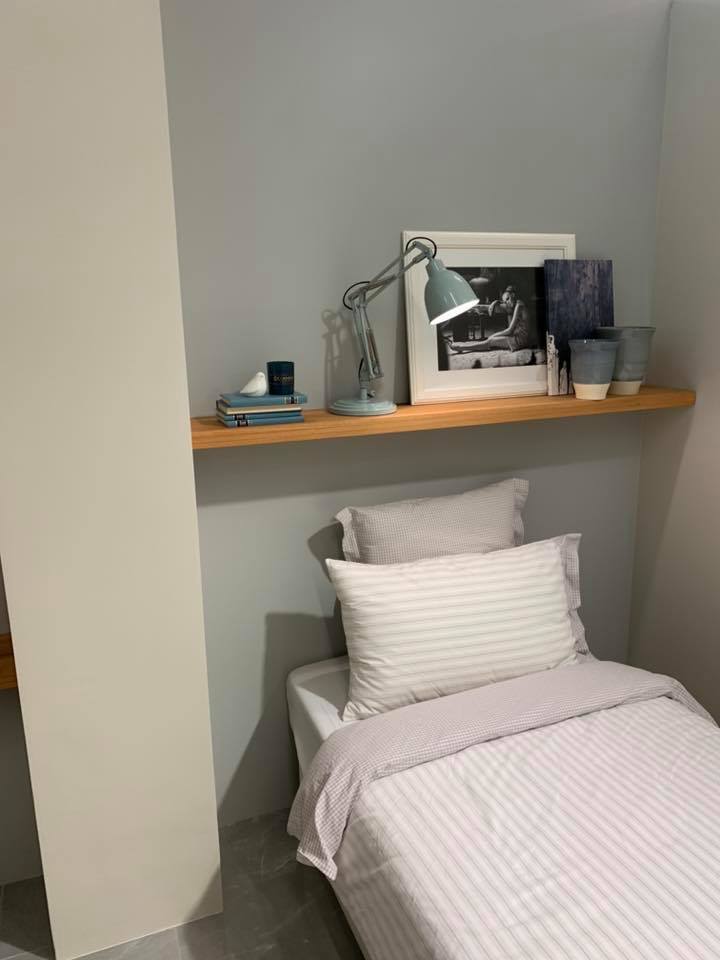
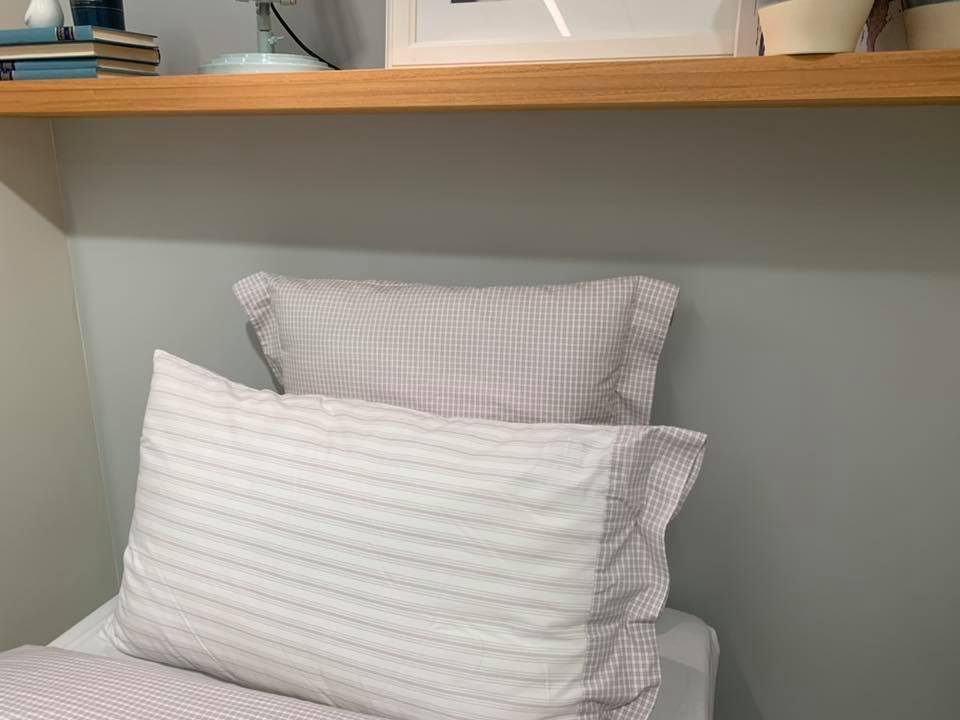
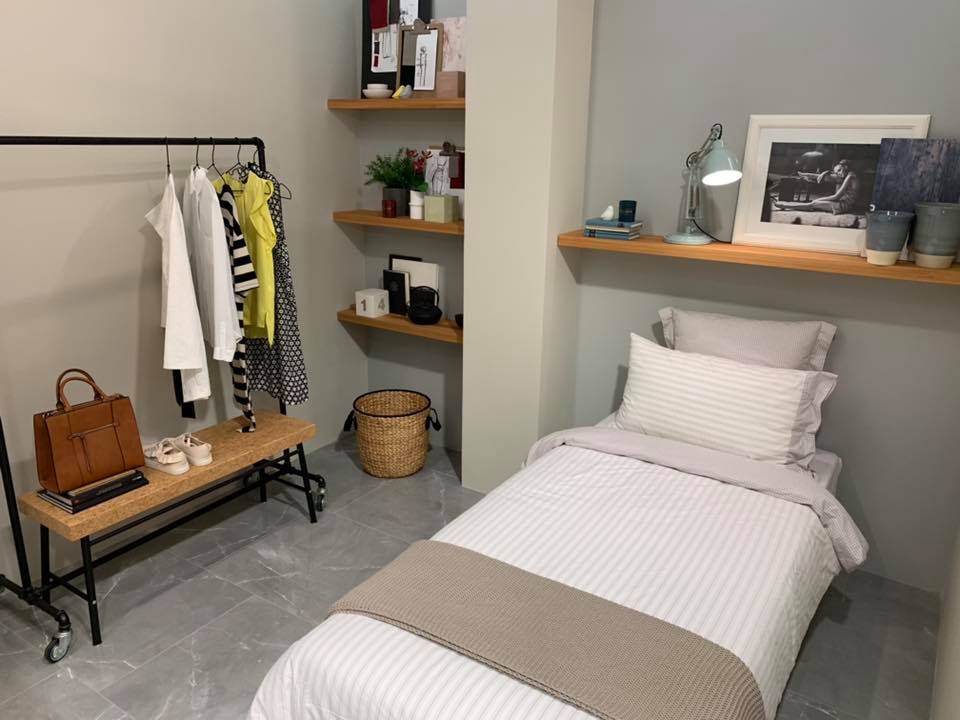
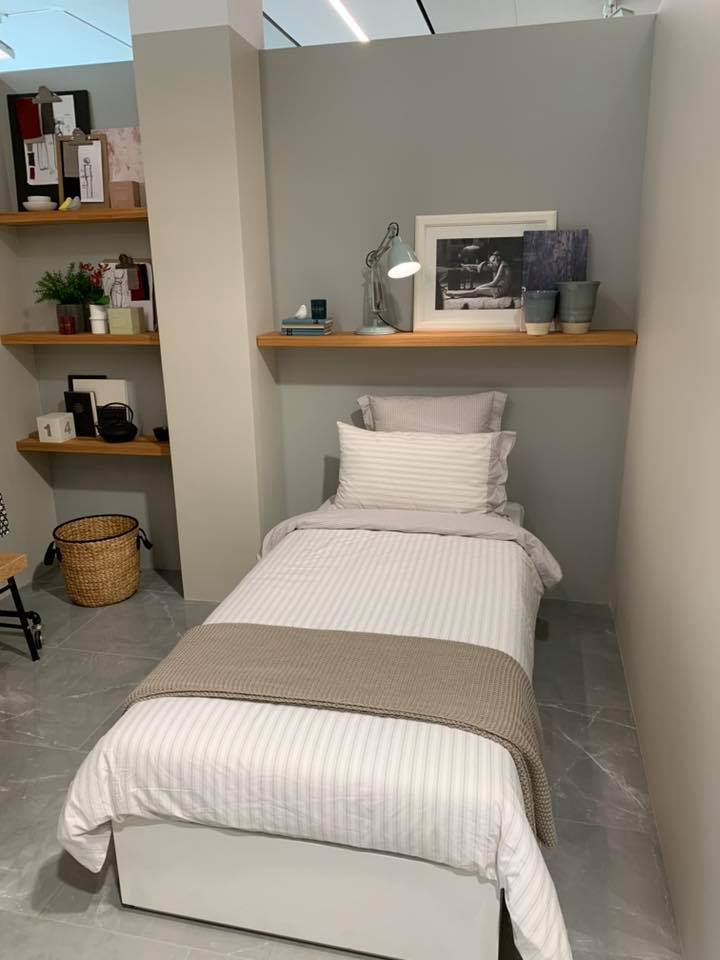
Piastrelle colorate di grande formato utilizzate per rivestire le pareti di questa cameretta: a prova di bambino! E se le pareti venissero "dipinte" con pennarelli o colori? è sufficiente pulirle con alcool.
The use of large-format coloured porcelain stoneware slabs has expanded
Coloured large-format slabs are not just for bathrooms
Large-format coloured porcelain stoneware slabs are no longer a material confined to bathroom spaces, but are now used throughout the home and in contemporary design projects. Today, coloured surfaces are applied in many areas of the house—bedrooms, living rooms, fireplaces—and are increasingly used in a wide variety of other contexts as well.
Coloured walls in bedrooms, kitchens and living areas
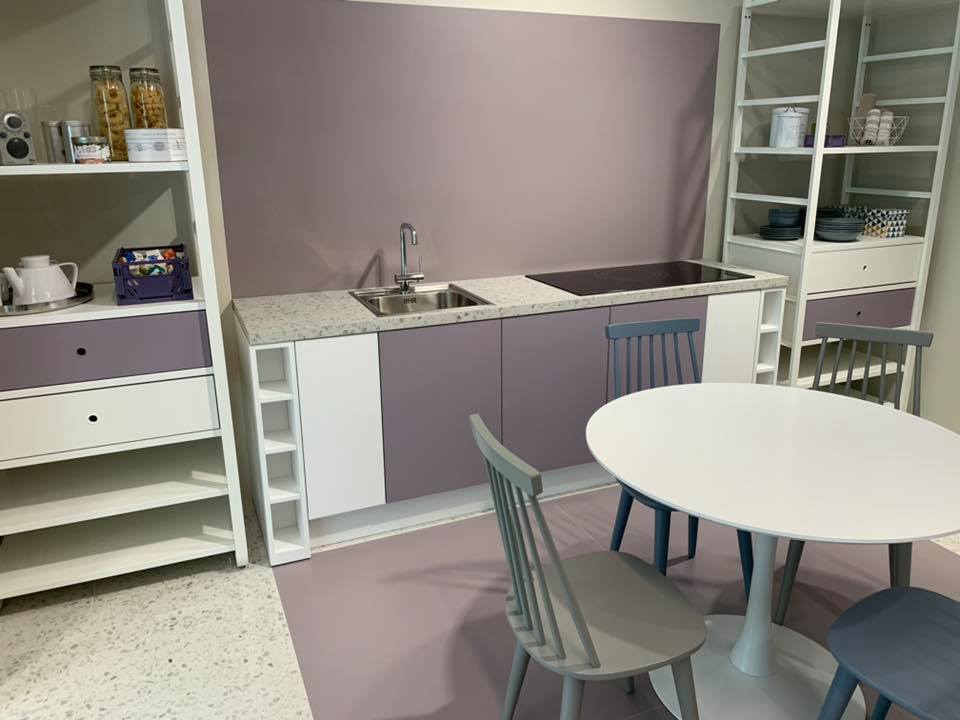
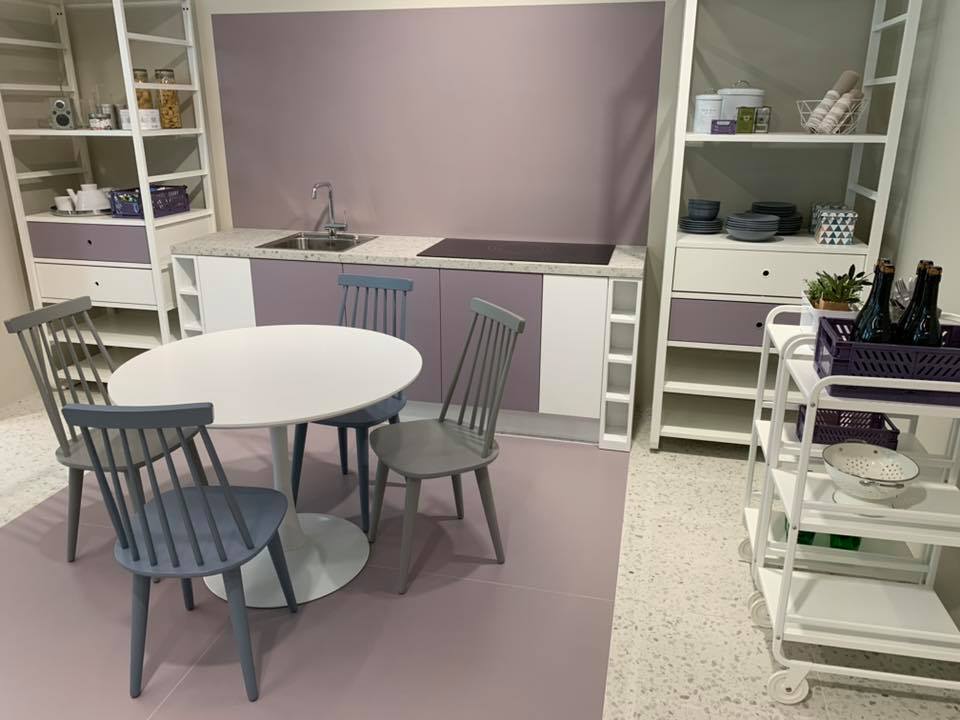
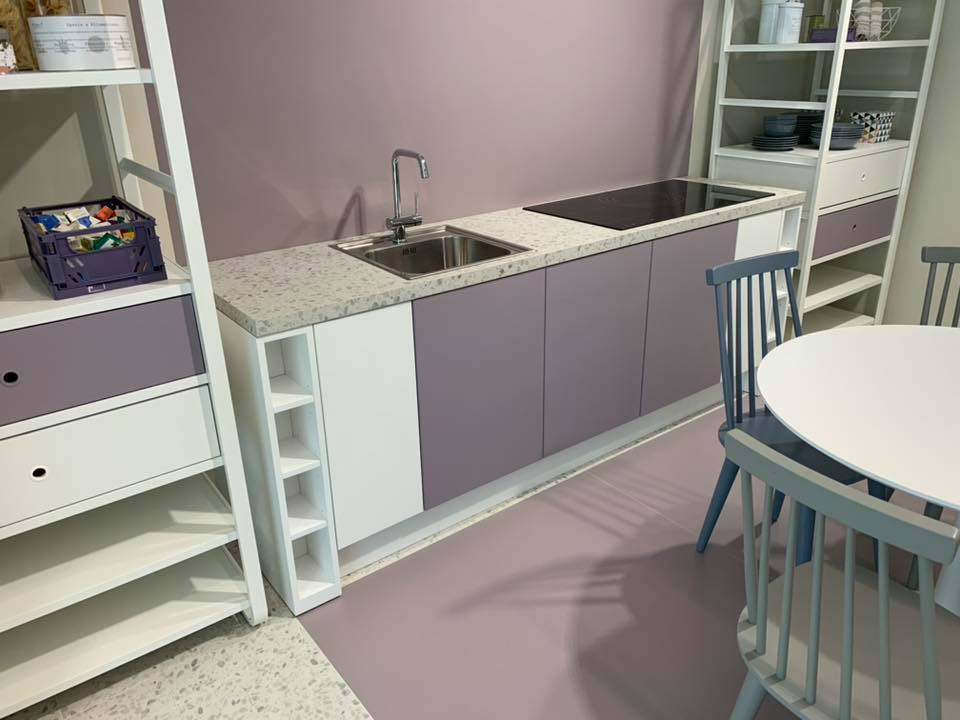
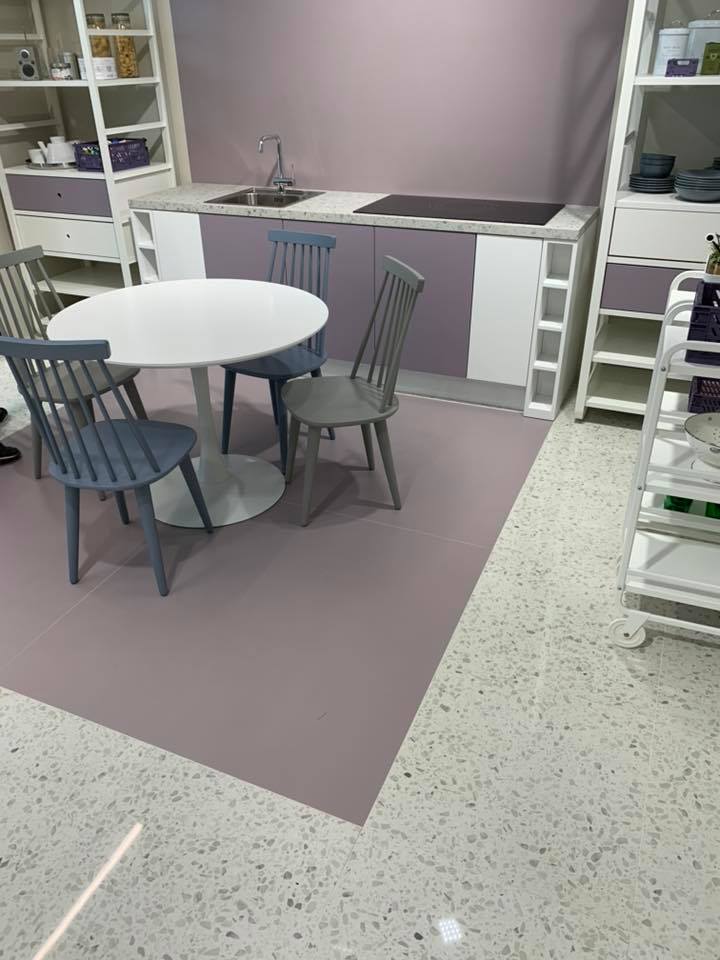
Bedroom walls can be clad with continuous, hygienic surfaces, used as decorative backdrops or headboards; in kitchens, coloured slabs become wall coverings, splashbacks, worktops and backsplashes resistant to stains, heat and detergents. In living areas, large formats make it possible to create architectural backdrops, statement walls or integrated furnishing elements, defining space with a clean and refined design gesture.
Beyond residential applications
This versatility extends well beyond residential settings: offices, shops, showrooms, bars and public spaces use large-format slabs to achieve durable, easy-to-maintain and highly distinctive surfaces. Coloured porcelain stoneware thus becomes a truly cross-disciplinary architectural material, capable of combining aesthetics, functionality and visual continuity in a wide range of environments.
Grandi lastre in grès colorate in cucina
Porcelain stoneware slabs: colour that lasts over time
Colour stability indoors and outdoors
One of the greatest advantages of coloured porcelain stoneware slabs is their long-term colour stability, both indoors and outdoors. As a ceramic material fired at extremely high temperatures, the colour is not a surface finish subject to oxidation or degradation, but an integral part of the material itself. For this reason, it does not fade, yellow or change tone over time.
Resistance in everyday use
Porcelain stoneware surfaces also show exceptionally high resistance to daily use: detergents, even common household or mildly alkaline ones, do not affect the colour; limescale may deposit on the surface but can be easily removed without leaving permanent marks; cosmetic products such as soaps, shampoos or hair dyes are not absorbed by the surface; and in kitchens, fats and oils do not penetrate the material and can be removed with normal cleaning.
Relatively simple maintenance
This combination of resistance, non-absorbency and ease of maintenance makes coloured large-format slabs an ideal solution even for heavily used environments, where aesthetics must remain unchanged over time without requiring extraordinary interventions. It is advisable, approximately every two to three years, to carry out a deep degreasing treatment to remove the layers of grease that naturally accumulate on interior surfaces in the home.
Rivestimento parete negozio in grandi lastre colorate
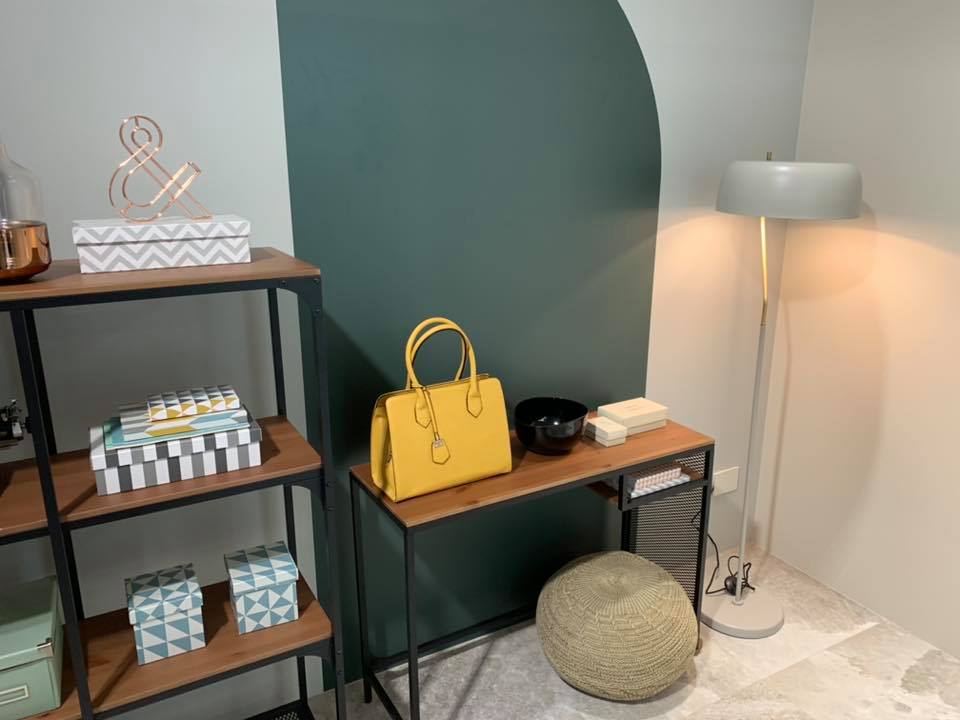
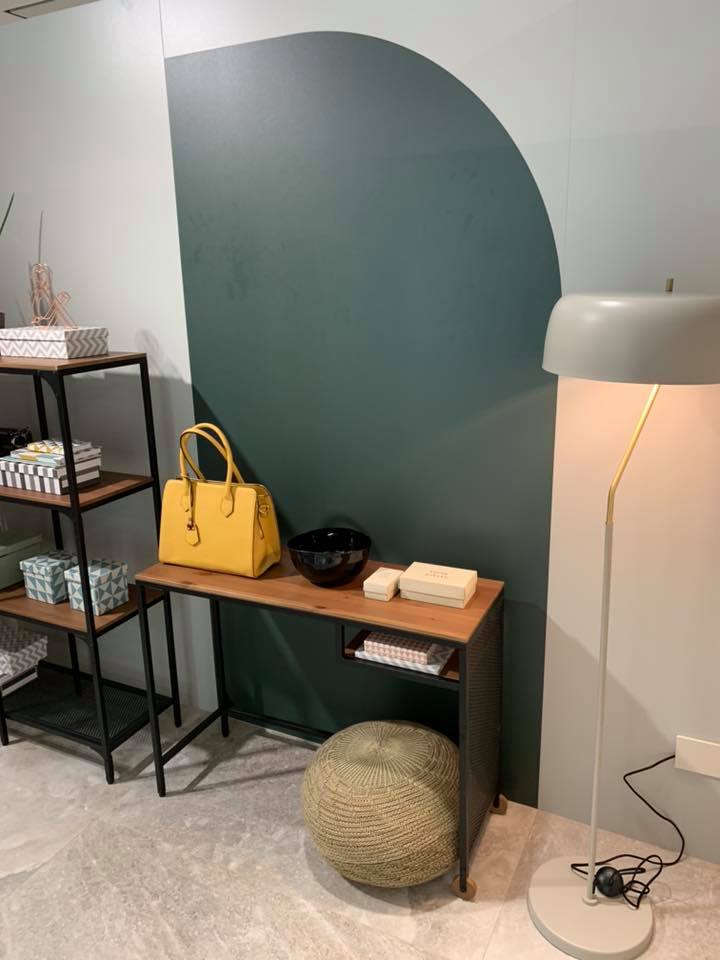
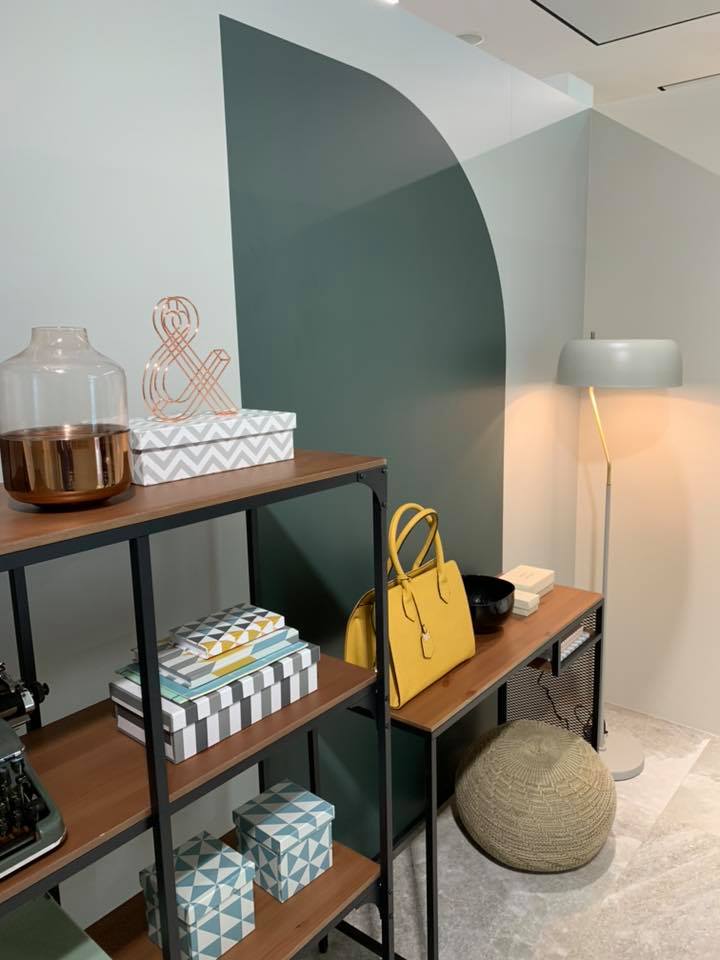
Le piastrelle colorate possono essere utilizzate anche per rendere più "cool" una zona del tuo negozio. In questo caso delle lastre in due gradazioni di verde sono state accostate per evidenziare i prodotti posti davanti.
Installation of slabs and the “true” cost of these surfaces
Labour costs are significant
When discussing large-format porcelain stoneware slabs, it is essential to distinguish between the cost of the material itself and the true cost of the finished cladding. Today, the most significant cost item is no longer just the slab, but labour, which has an increasingly major impact on the overall project cost. We have dedicated a specific article to the costs of tile installation and laying.
Why is the cost high?
Installing large-format slabs is a complex operation: it requires highly skilled installers, dedicated equipment, longer working times and extremely careful handling and cutting, because the material is as high-performing as it is delicate. Added to this are specific adhesives, which are essential to ensure proper bonding, flatness and durability on large-format surfaces, as well as an inevitably higher waste percentage compared to traditional formats, due to cuts, adjustments and special processing.
Why a “turnkey” solution is preferable
All these factors contribute to a total cost that must be assessed with awareness: large-format slabs deliver extraordinary aesthetic results, but they require an investment proportionate to the technical complexity of the system that makes them possible. Our advice is to rely on a well-structured company (as we are) with proven experience in working with large-format slabs, capable of providing a complete turnkey service.
Rivestimento pareti e muretto in camera con lastre colorate
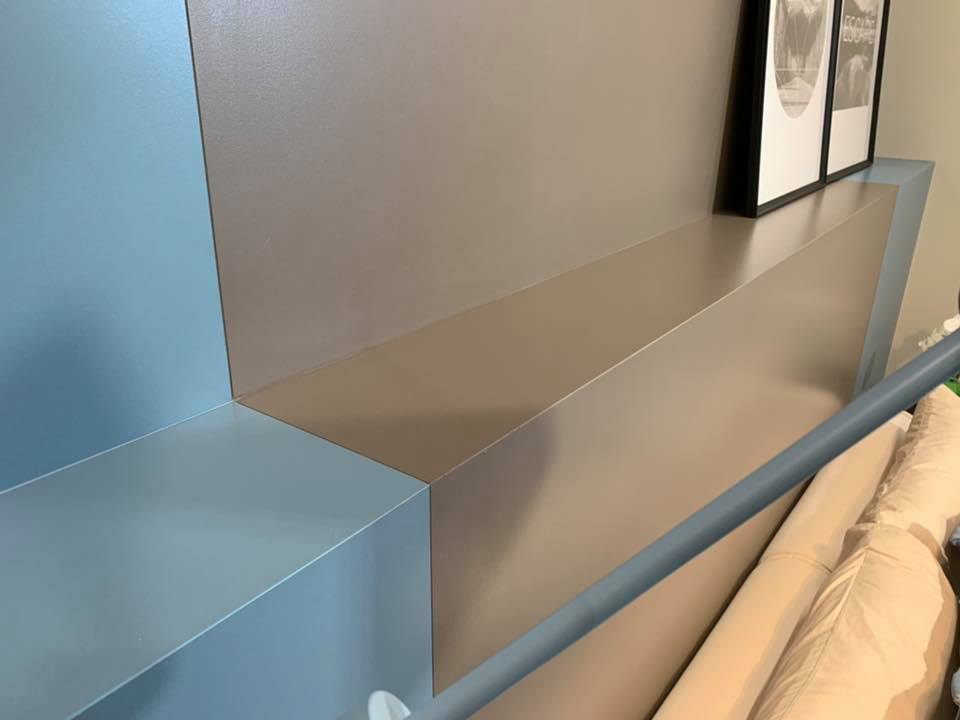
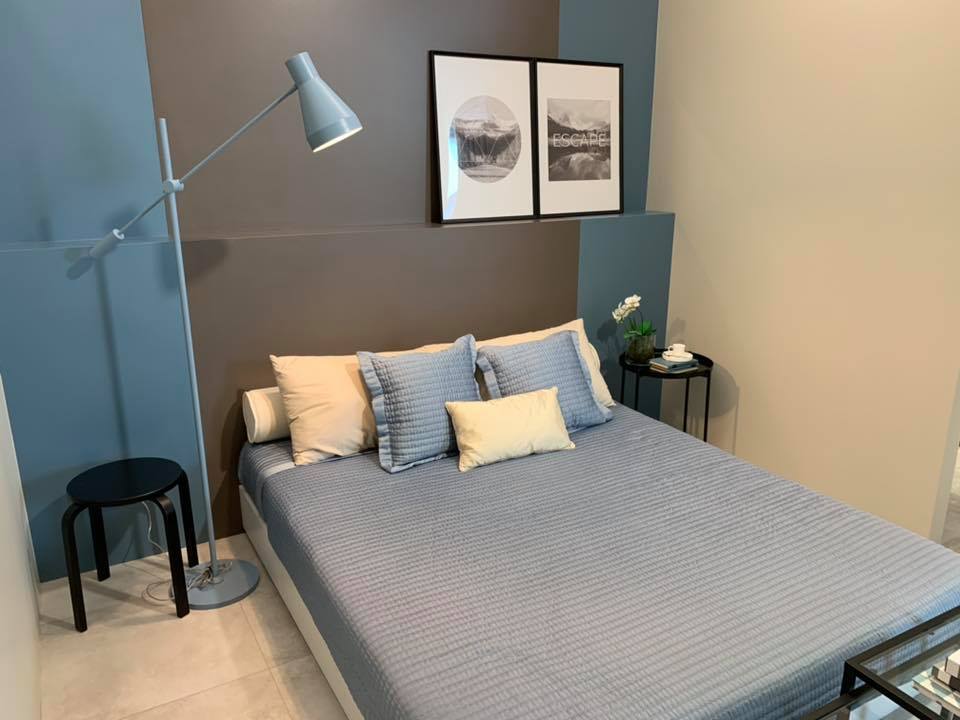
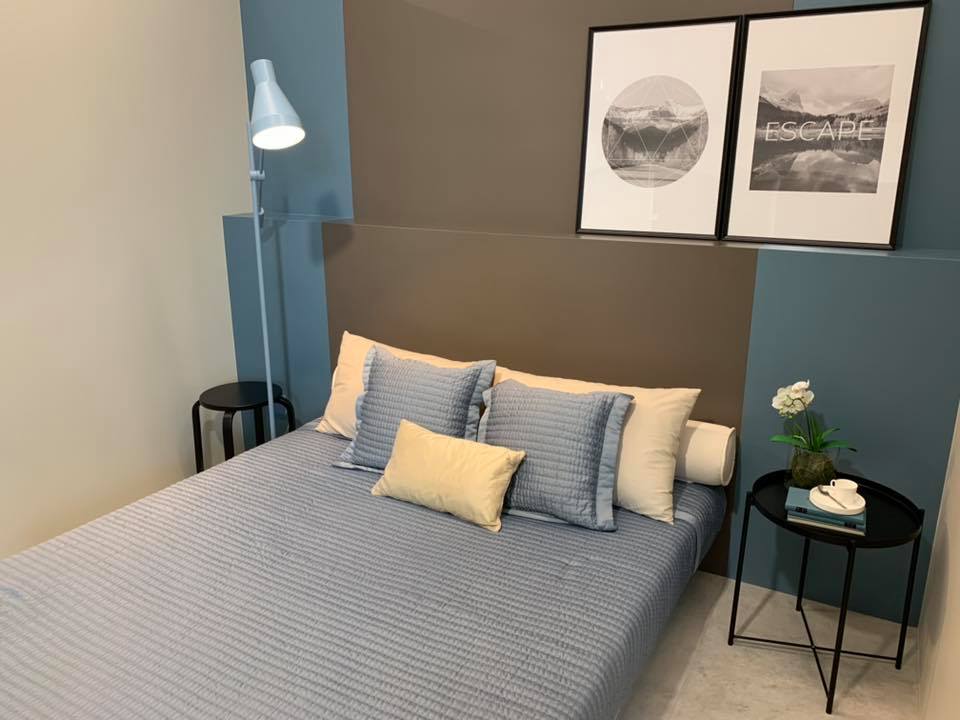
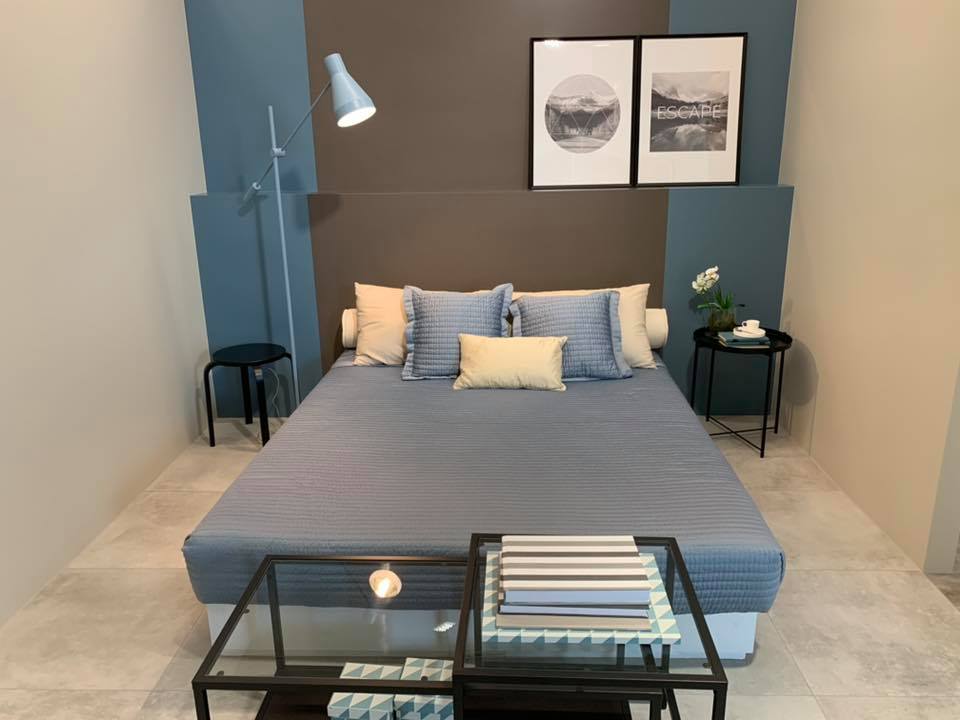
Un'altra camera dove, utilizzando delle grandi lastre in grès colorate, è stata realizzata la testiera del letto. Il muretto diventa un piano di appoggio e la parete sarà sempre igienica e pulita.
Colour perception on large-format coloured porcelain stoneware slabs
Durability should be considered in any purchase
When assessing the sustainability of a material, it is increasingly important to consider its entire life cycle, not just its initial impact. From this perspective, large-format coloured porcelain stoneware slabs represent a particularly virtuous solution thanks to their long-term durability: once installed, they retain their performance and aesthetics for decades, without the need for replacement or periodic treatments.
Alternatives to coloured slabs
When compared with paints, enamels or wallpaper—which require frequent renewal, constant maintenance and the repeated use of chemical products—ceramic surfaces allow for a drastic reduction in interventions over time. This results not only in lower management costs, but also in reduced resource consumption throughout the life of the building.
Long-term sustainability
The initial environmental impact of ceramic production is thus offset by the material’s long lifespan, its chemical inertness and the ability to maintain hygienic, healthy environments through simple cleaning operations, making porcelain stoneware a sustainable choice—especially when viewed from a long-term perspective.
Decoro realizzato con grandi lastre colorate
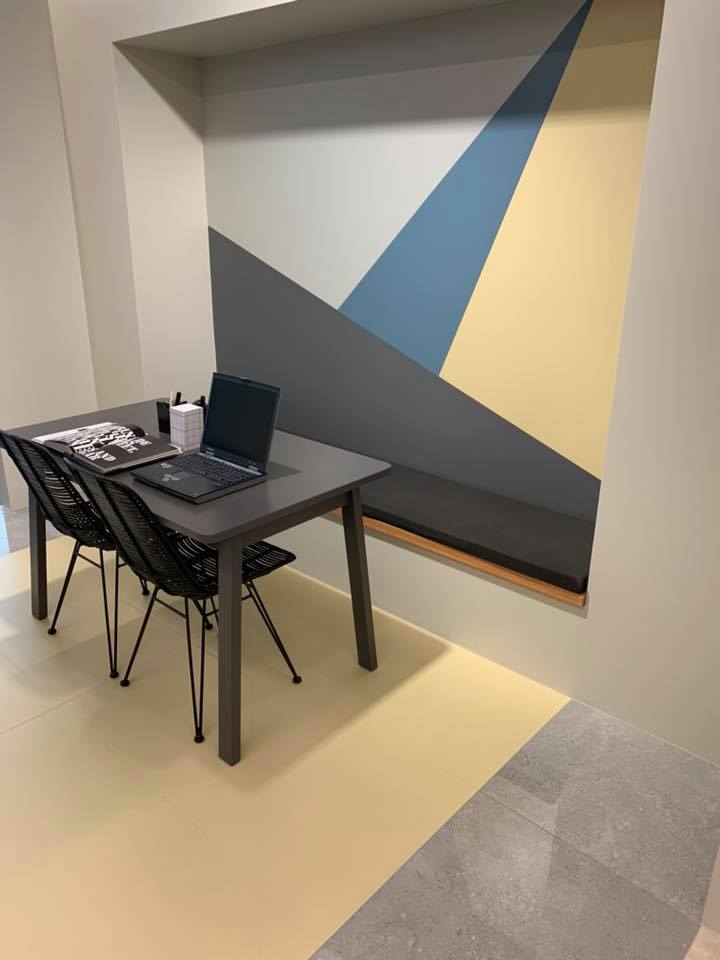
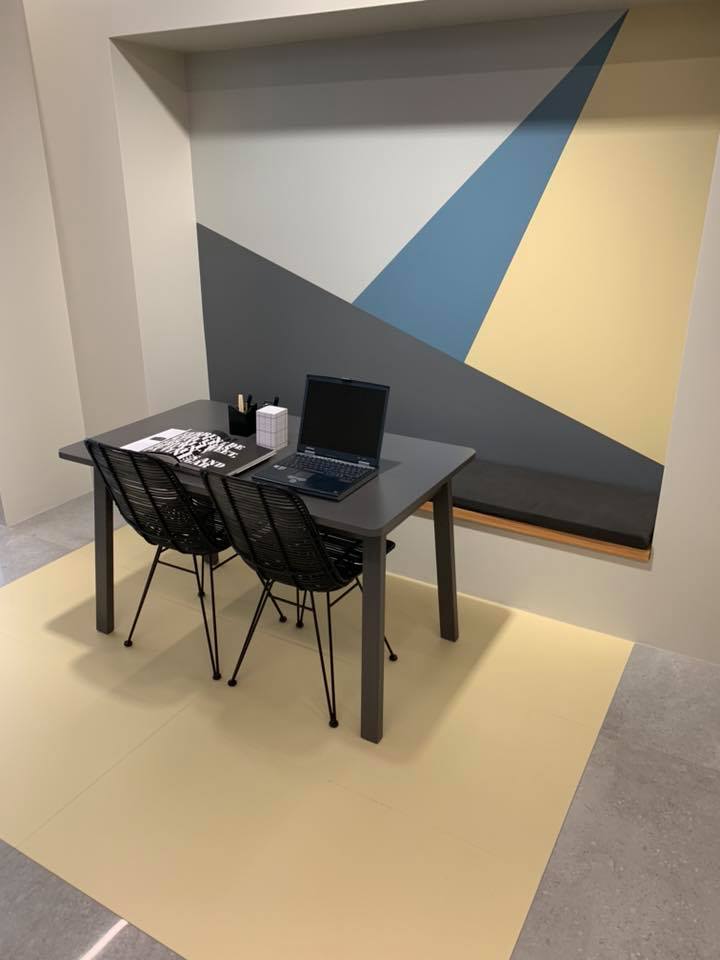
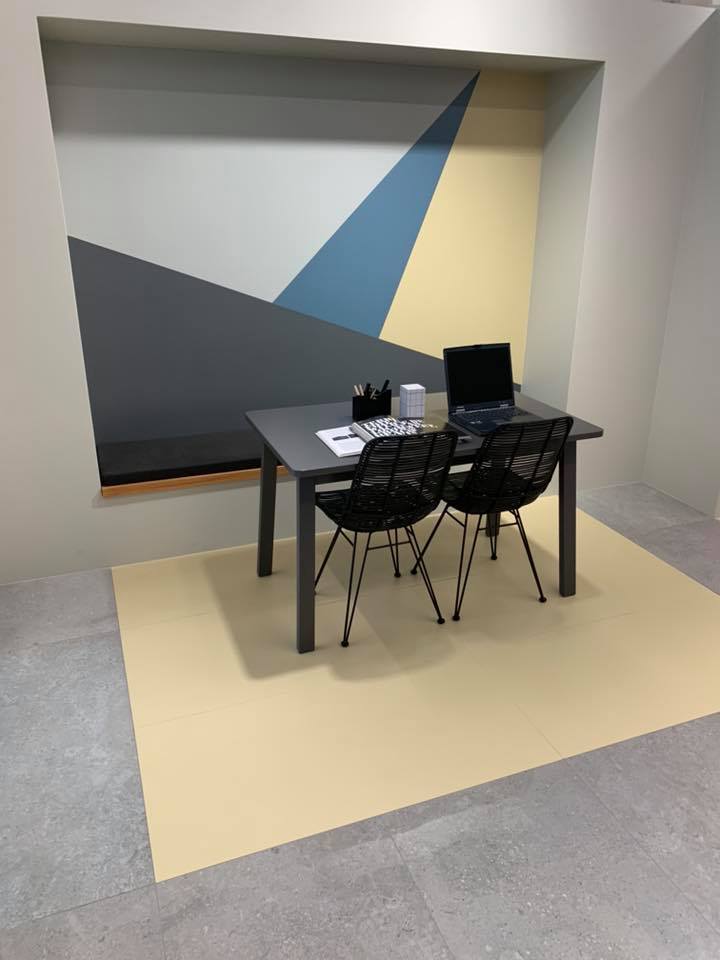

Le piastrelle colorate possono essere trasformate in forme geometriche che si combinano, quasi come in un quadro, per decorare uno spazio commerciale o un bar.
Are coloured slabs a short-term or long-term trend?
Colour is a timeless choice
Colour, compared to other decorative solutions strongly influenced by trends and styles, often represents a timeless choice, especially when expressed through balanced and well-contextualised shades. However, precisely because colour becomes the protagonist, there are also risks associated with very bold or highly distinctive tones, which may prove tiring or difficult to reinterpret over the long term.
Why it should be chosen carefully
For this reason, it is essential to carefully assess the role colour should play within a project: when used as an accent—on a wall, a niche or an architectural element—it can enhance a space without overly constraining it; when adopted as a total look, covering large surfaces or entire rooms, it requires greater design awareness, as it becomes an integral part of the space’s identity.
Rely on surface specialists like us
Coloured large-format slabs offer great expressive freedom, but it is precisely this freedom that makes it necessary to strike a balance between personal taste, long-term durability and the ability of colour to interact with furnishings, light and the function of the space. For this reason, you should rely on surface specialists, capable of guiding you towards the most suitable solution.
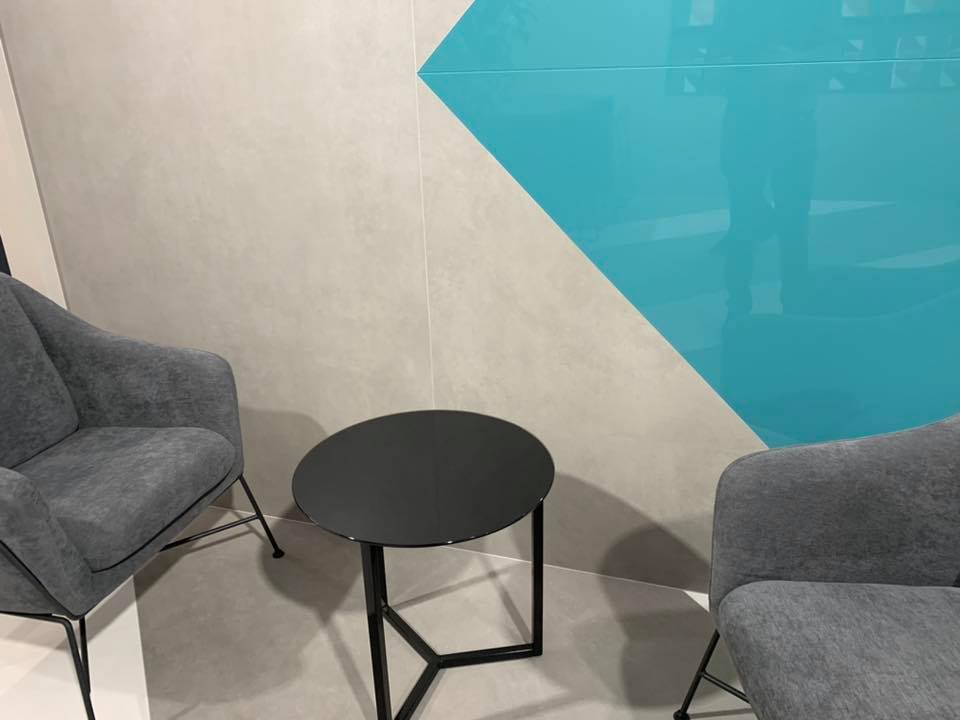
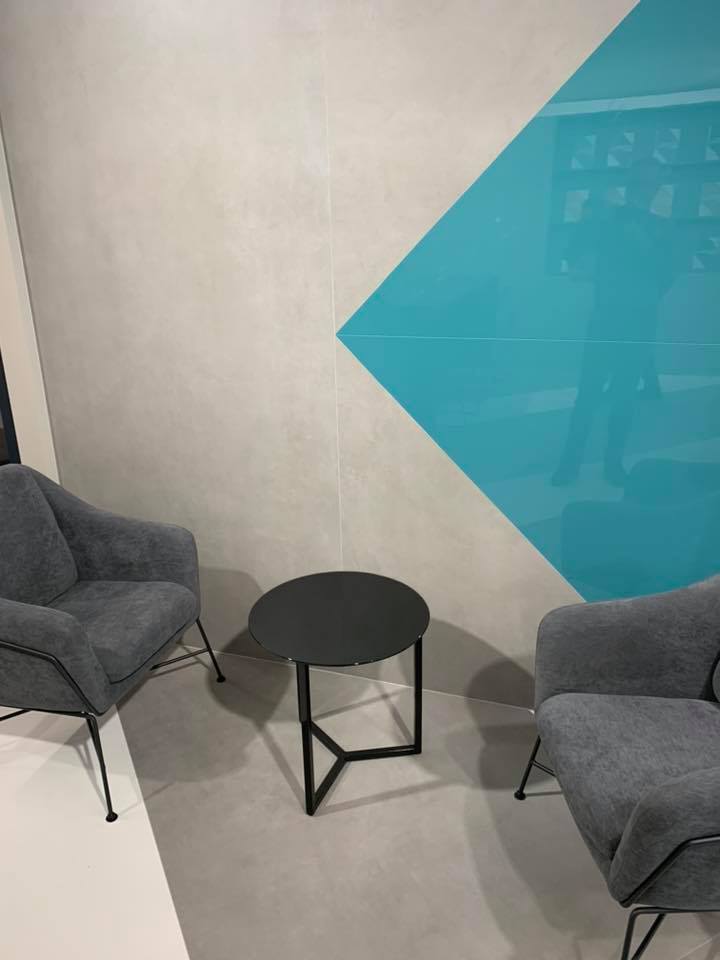
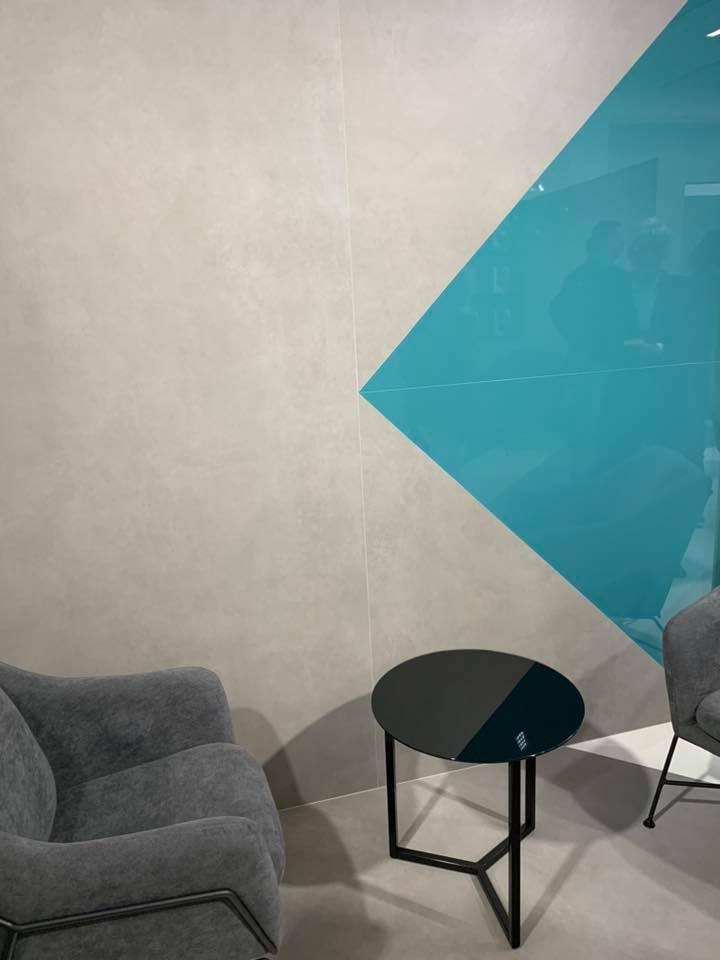
Grande lastra colorata come decoro per il soggiorno
Rely on a large-format porcelain stoneware specialist
Surfaces must be coordinated with furnishings and finishes
Large-format coloured porcelain stoneware slabs are not just a wall or floor covering, but a true architectural material, capable of defining space in a clear and long-lasting way. For this reason, their selection cannot be left to chance or based solely on the visual impact of a showroom sample. Instead, a moodboard should be developed, taking into account all the other furnishing elements and finishes within the home.
The need for a skilled architect and a specialised consultant
The role of specialised consultancy—together with that of the designer (the best architects in Vicenza and the best architects in Verona) and the retailer—becomes essential in guiding the client towards a truly informed decision. This guidance must consider not only colour, but also the architectural context, natural and artificial lighting, intended use, and installation methods.
Coordinating to create harmony
Correctly considering all these elements means transforming an aesthetic choice into a functional, durable and coherent solution over time. Large-format slabs offer extraordinary possibilities, but only through a careful, guided design process can they fully express their potential—avoiding mistakes and enhancing every space in an authentic way.
Rivestimento gres colore rosa
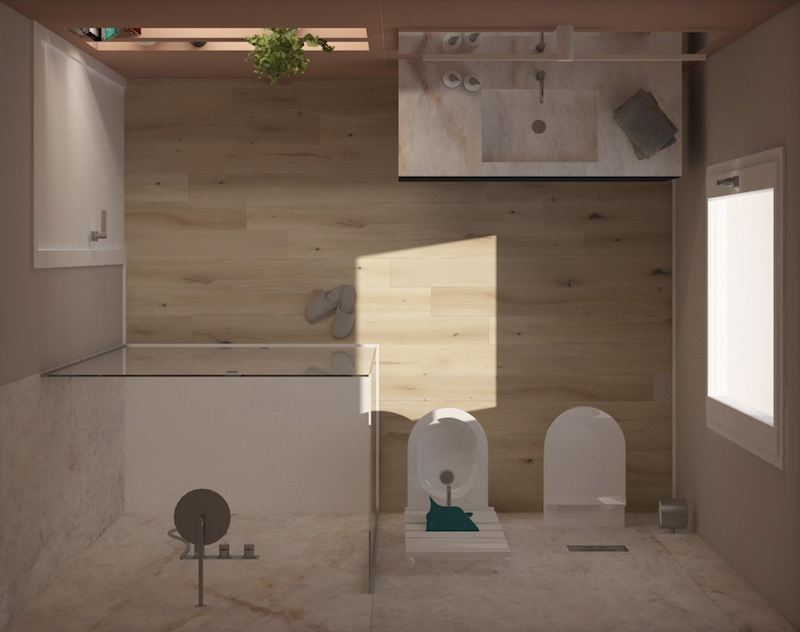
Large-format porcelain stoneware slabs: finishes
In conclusion, we invite you to visit one of our three showrooms, where you can see and experience first-hand the surface finishes of coloured slabs. You will find a wide range of products designed to meet every aesthetic requirement—from matt or natural finishes to semi-polished and fully polished surfaces, from vivid or desaturated colours to large and extra-large formats.
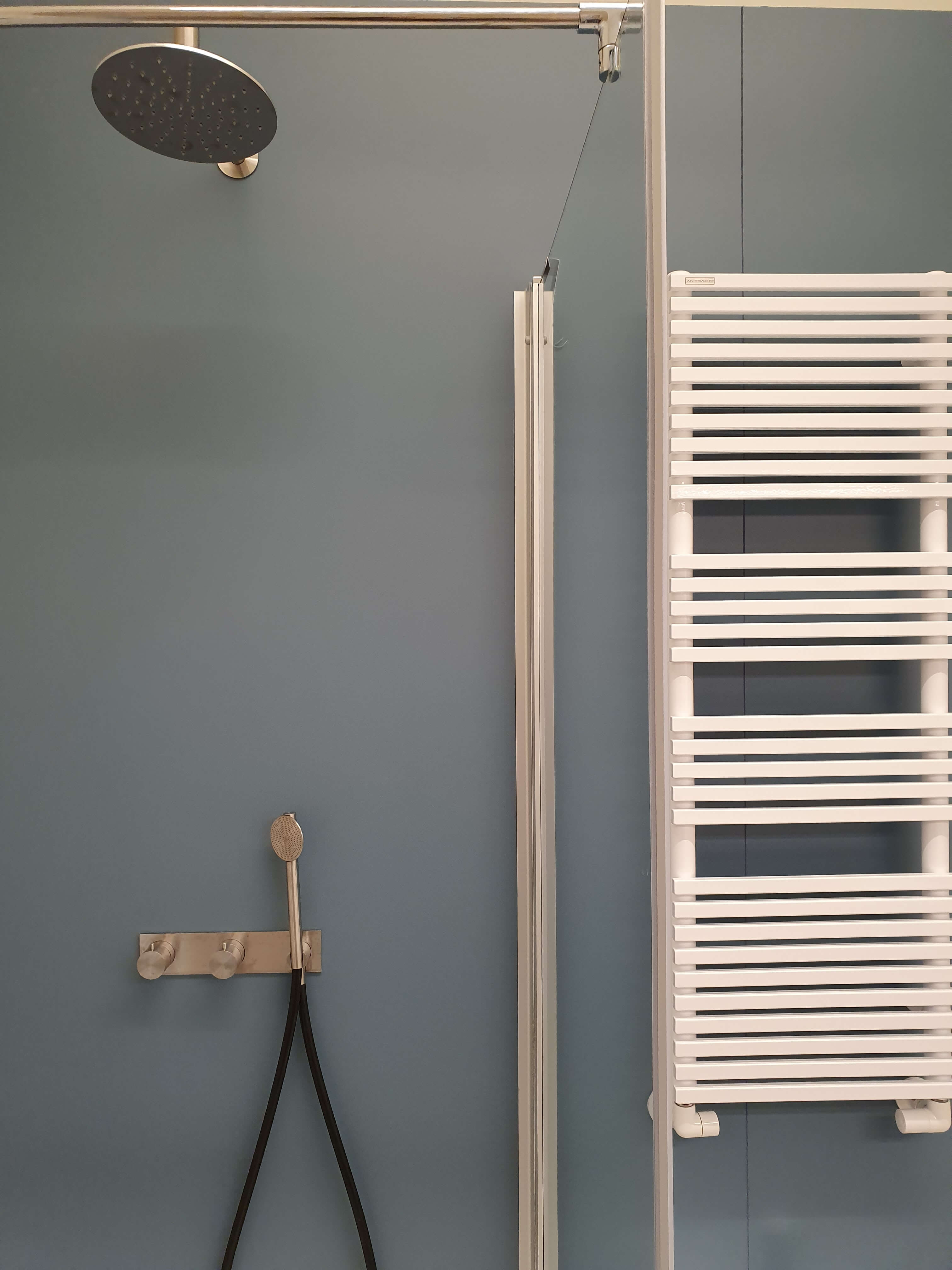
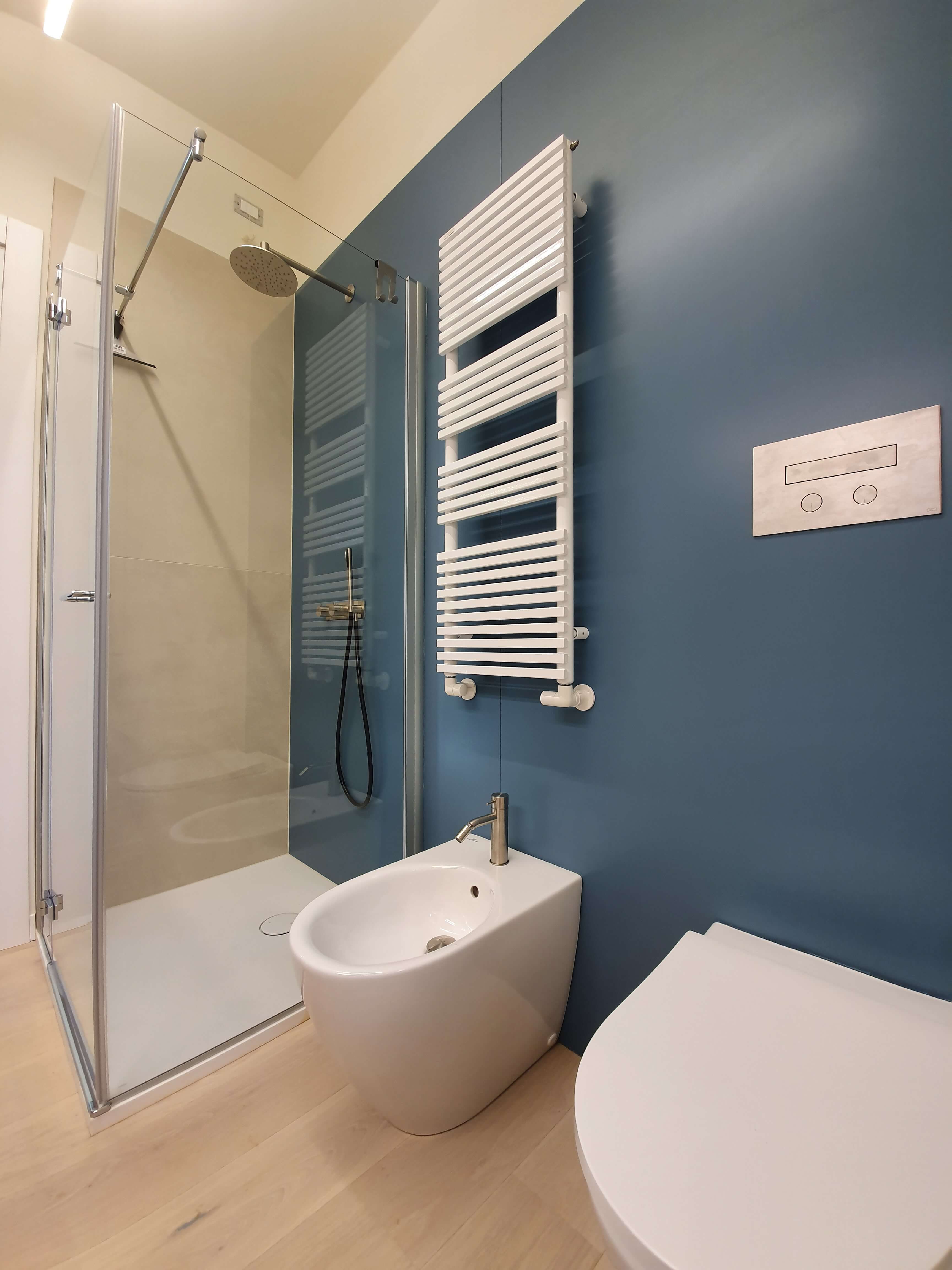
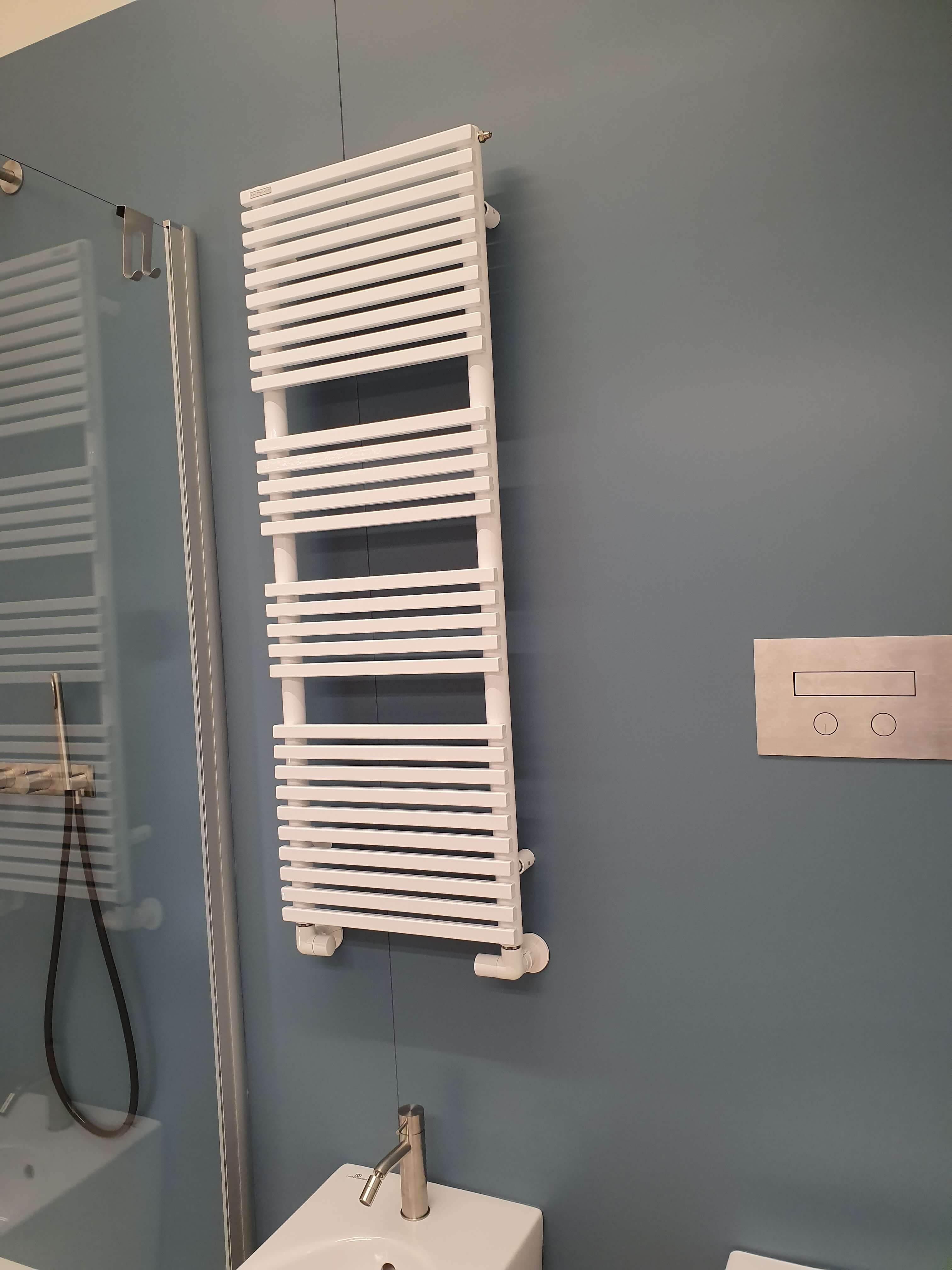
Rivestimento grandi lastre bagno
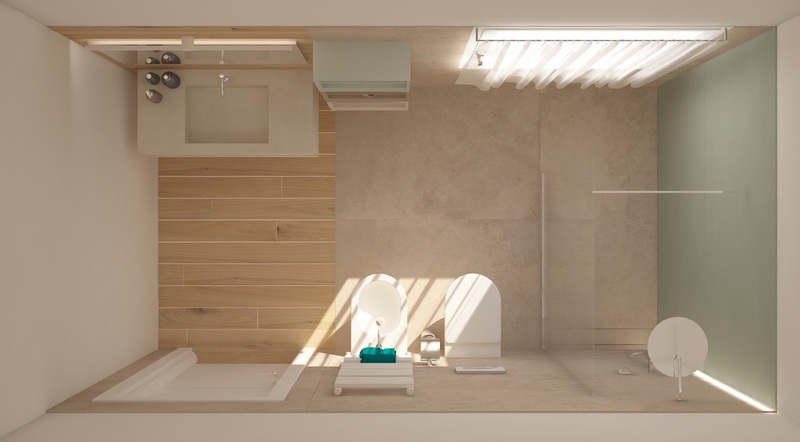
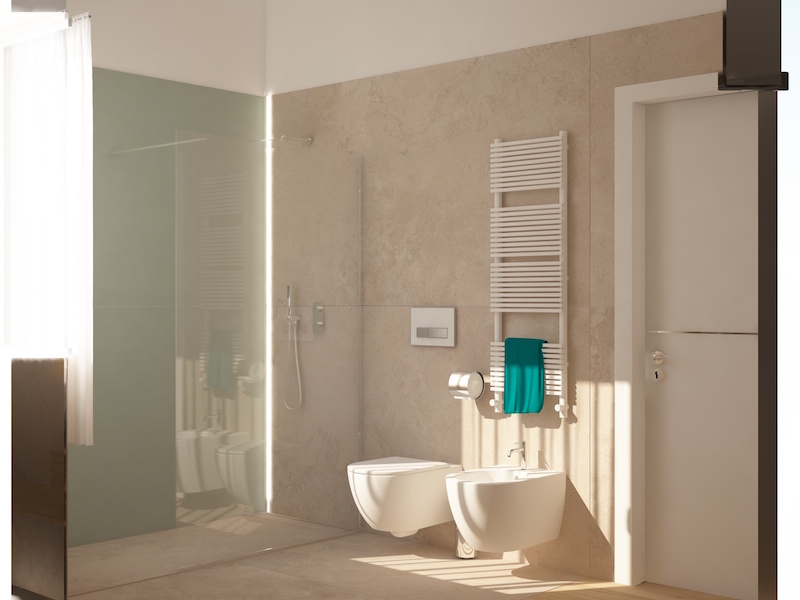
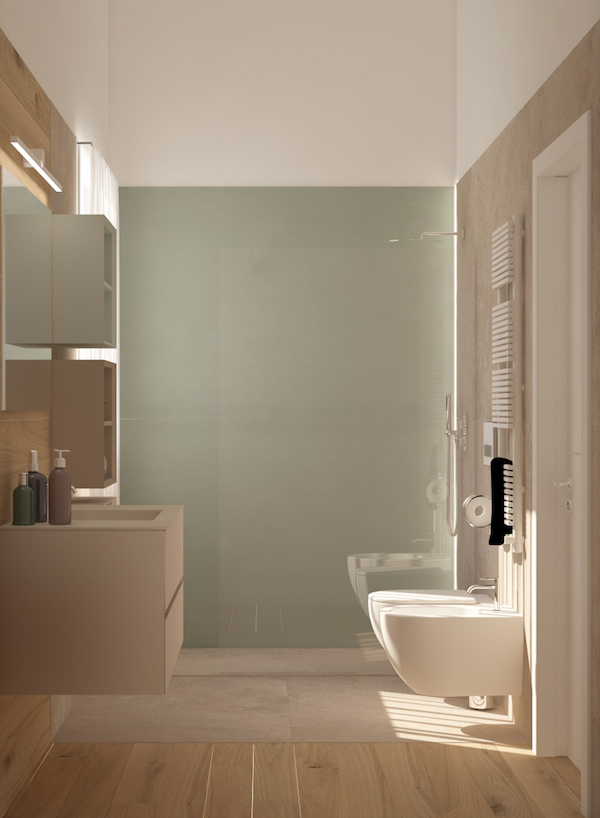
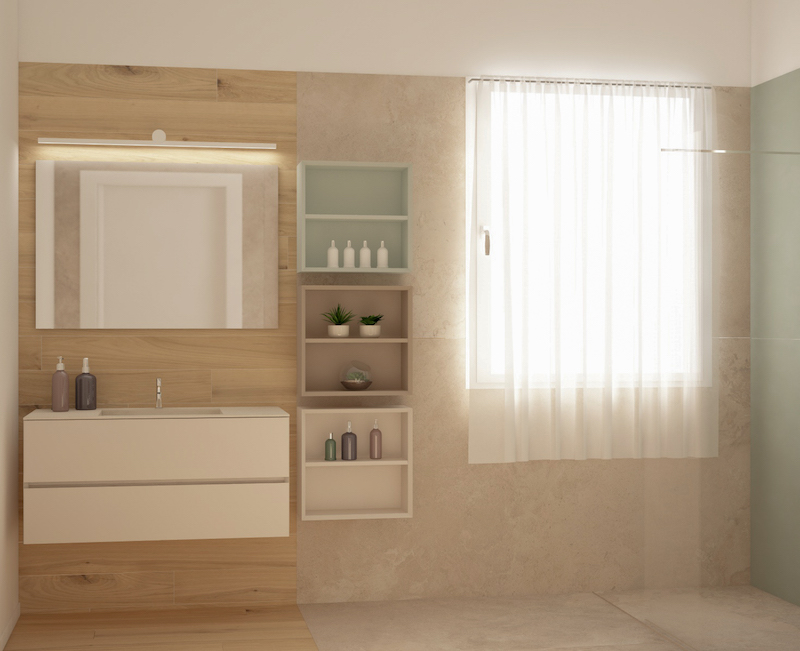
Bagno rivestito con grandi lastre in grès a tinta unita, Vicenza
Large-format porcelain stoneware slabs: applications and combinations
Coloured porcelain stoneware pieces
The use of large-format porcelain stoneware slabs does not end with wall and floor coverings: with the aid of specific tools and machinery designed for its processing, the material can be cut and shaped as required to create claddings and geometric decorations and to adapt to a wide variety of forms and solutions (low walls, niches, steps, seating, and more). For example, in our in-house workshop we also produce toothbrush holders, vases and bathroom shelves, using the same coloured porcelain stoneware slabs as those used for the wall coverings.
From surfaces to furnishings
The possible combinations are numerous: slabs with decorative effects can be paired and coordinated with solid-colour slabs in the same shade. Porcelain stoneware thus becomes a “malleable” and “versatile” material that can extend into every field of application—from flooring and wall coverings to true furnishings: worktops with integrated basins, bathtubs, tables and side tables, furniture fronts, kitchen worktops and even kitchen cabinet doors themselves.
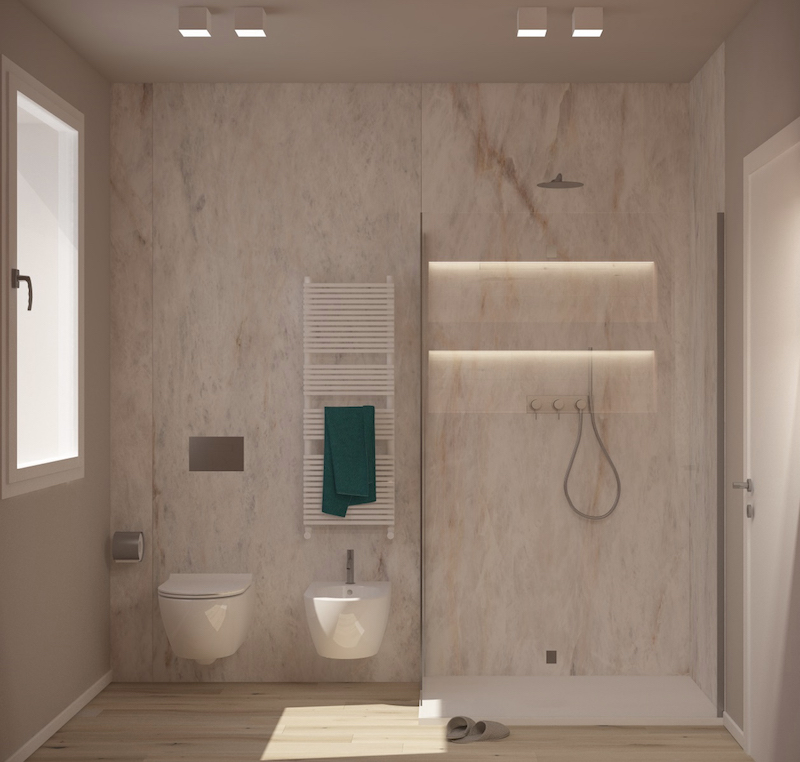
Parete e nicchia di un bagno decorate con grandi lastre in grès, Verona
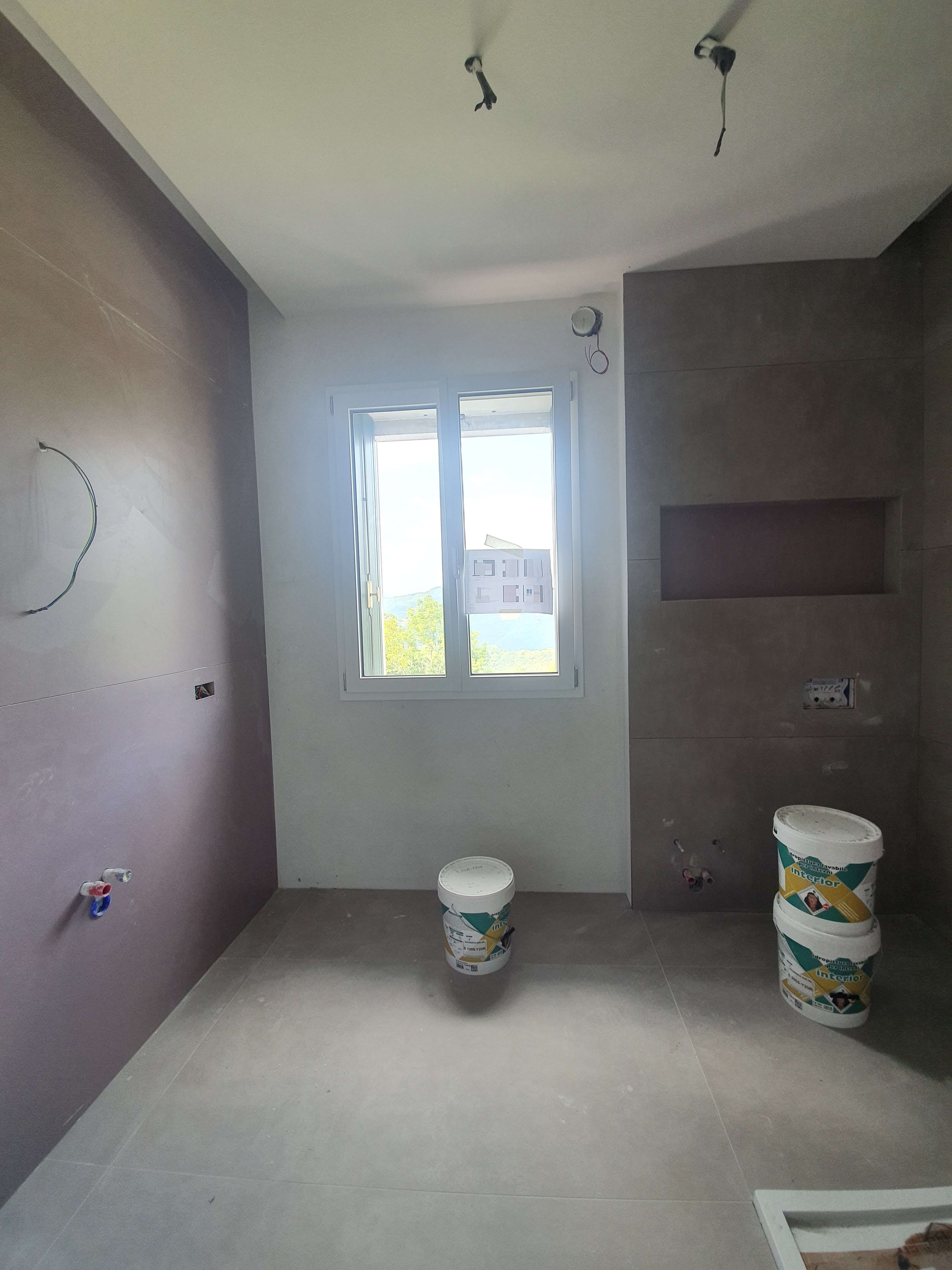
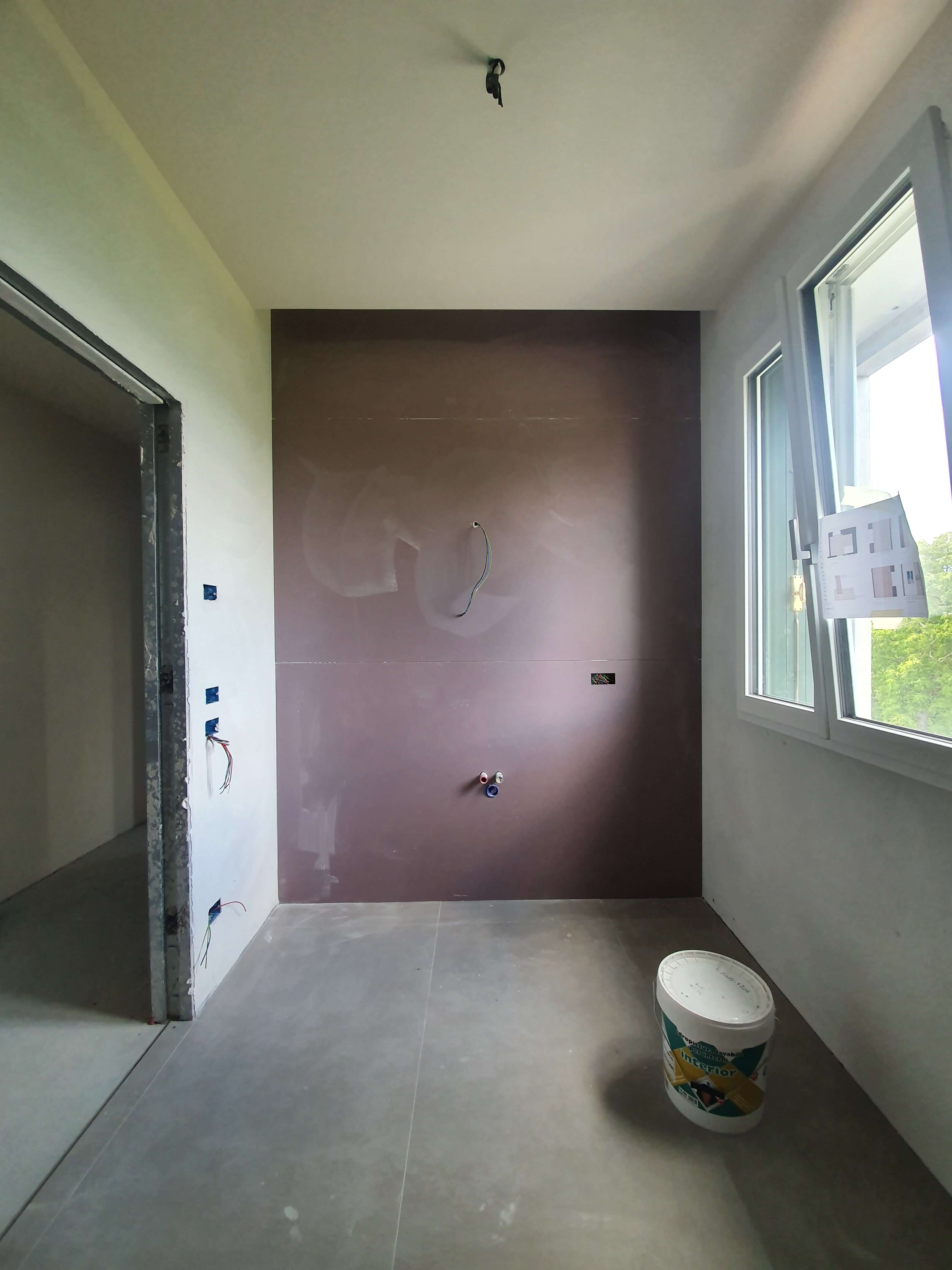
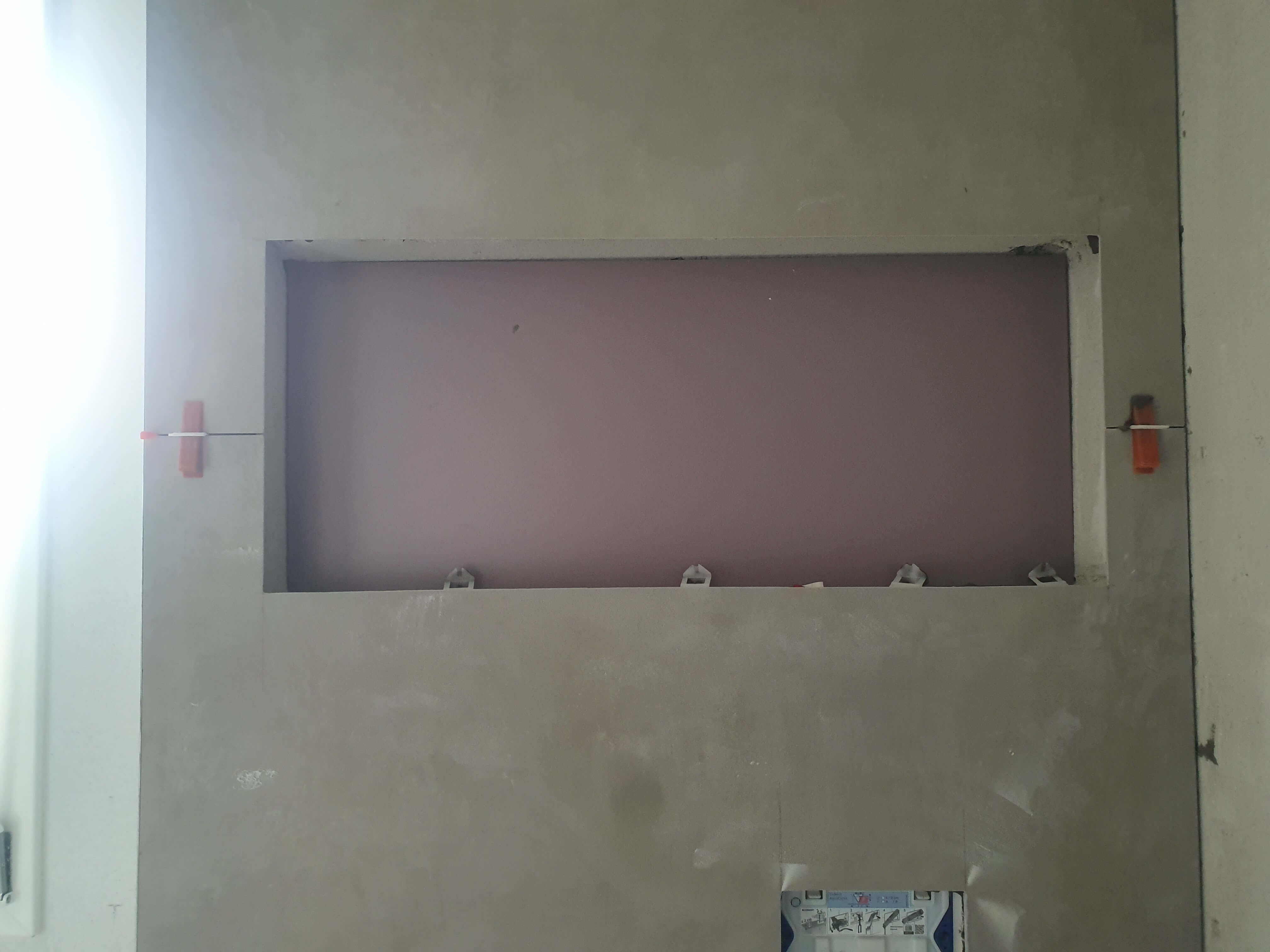
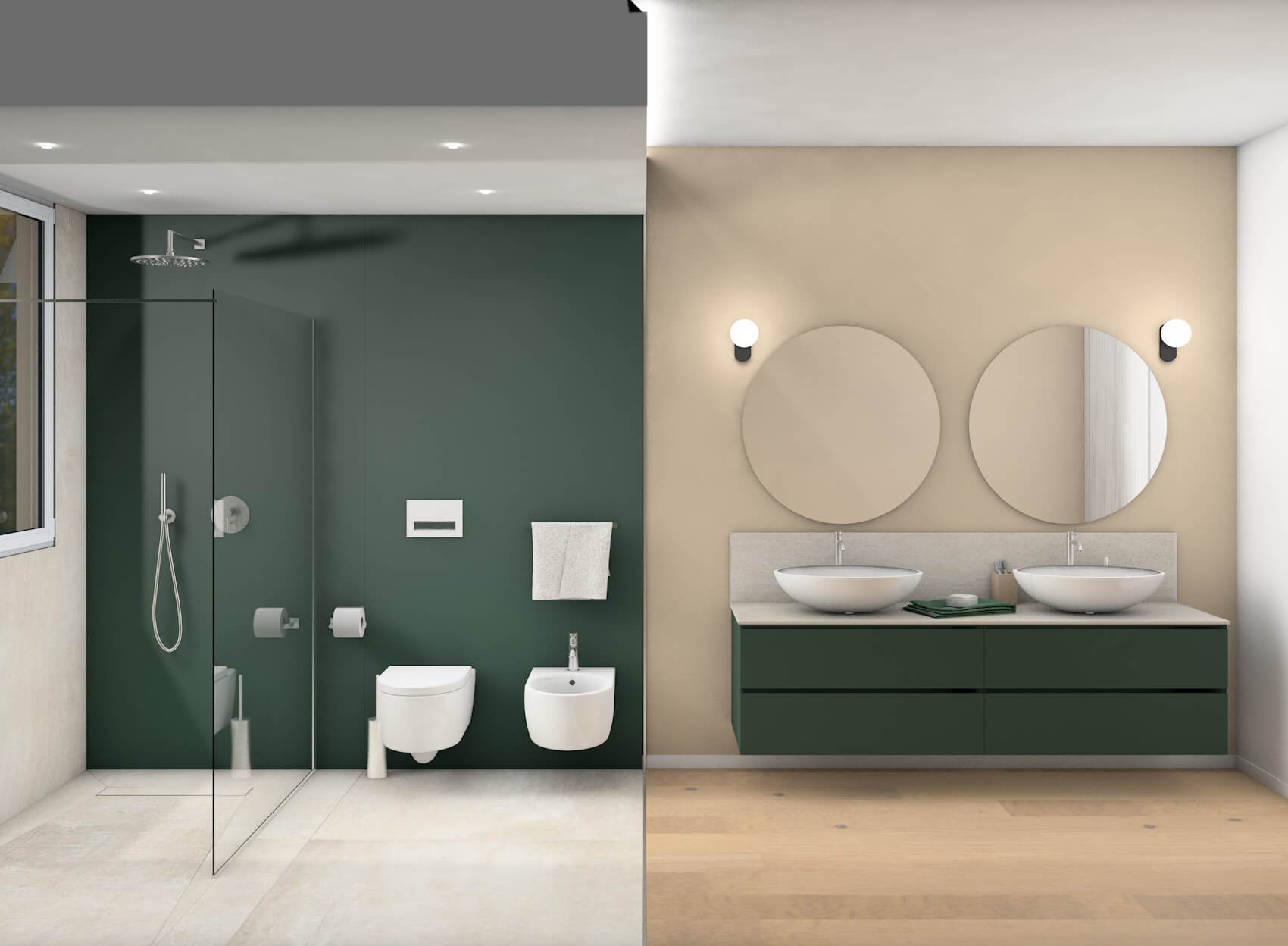
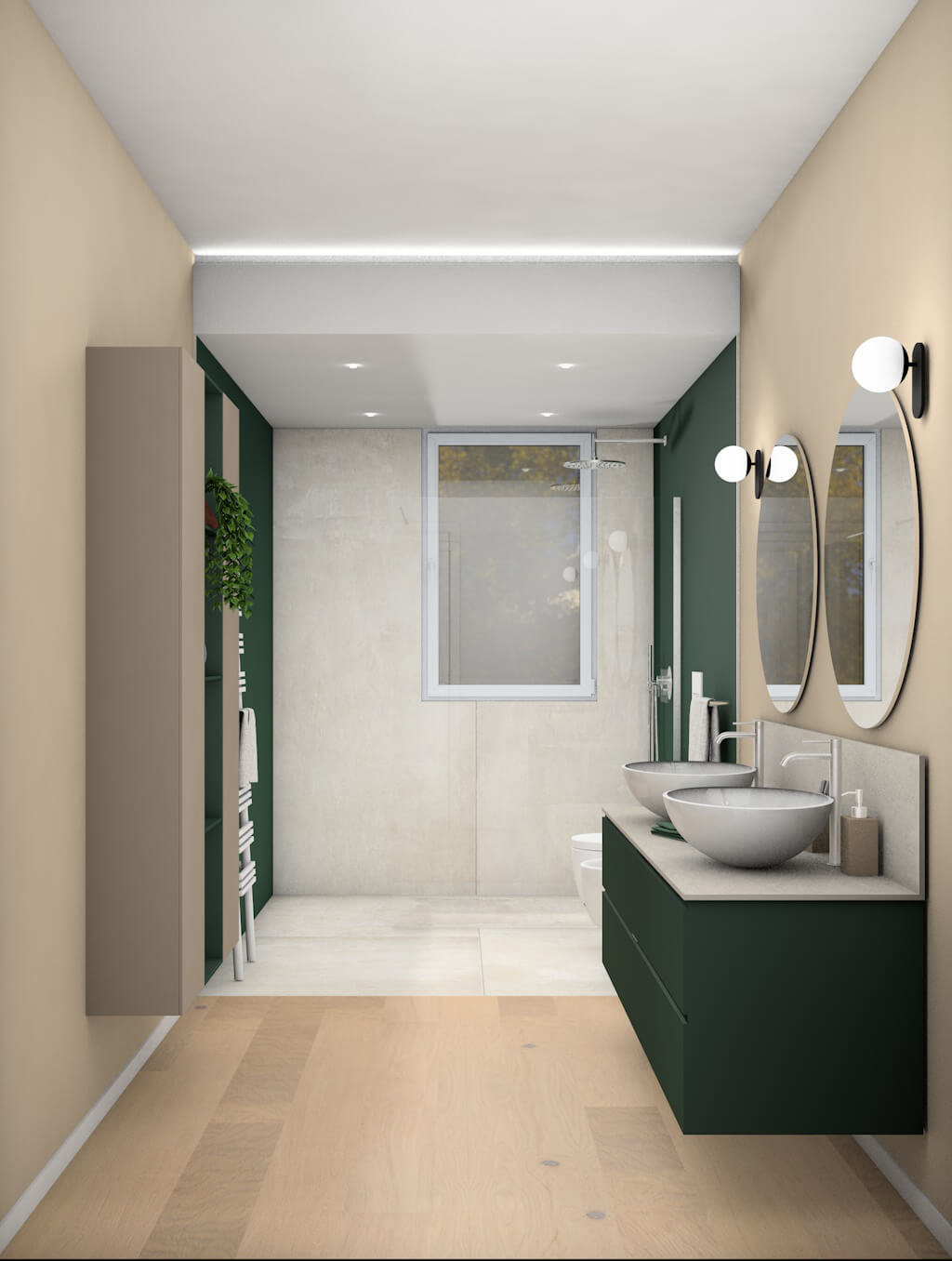
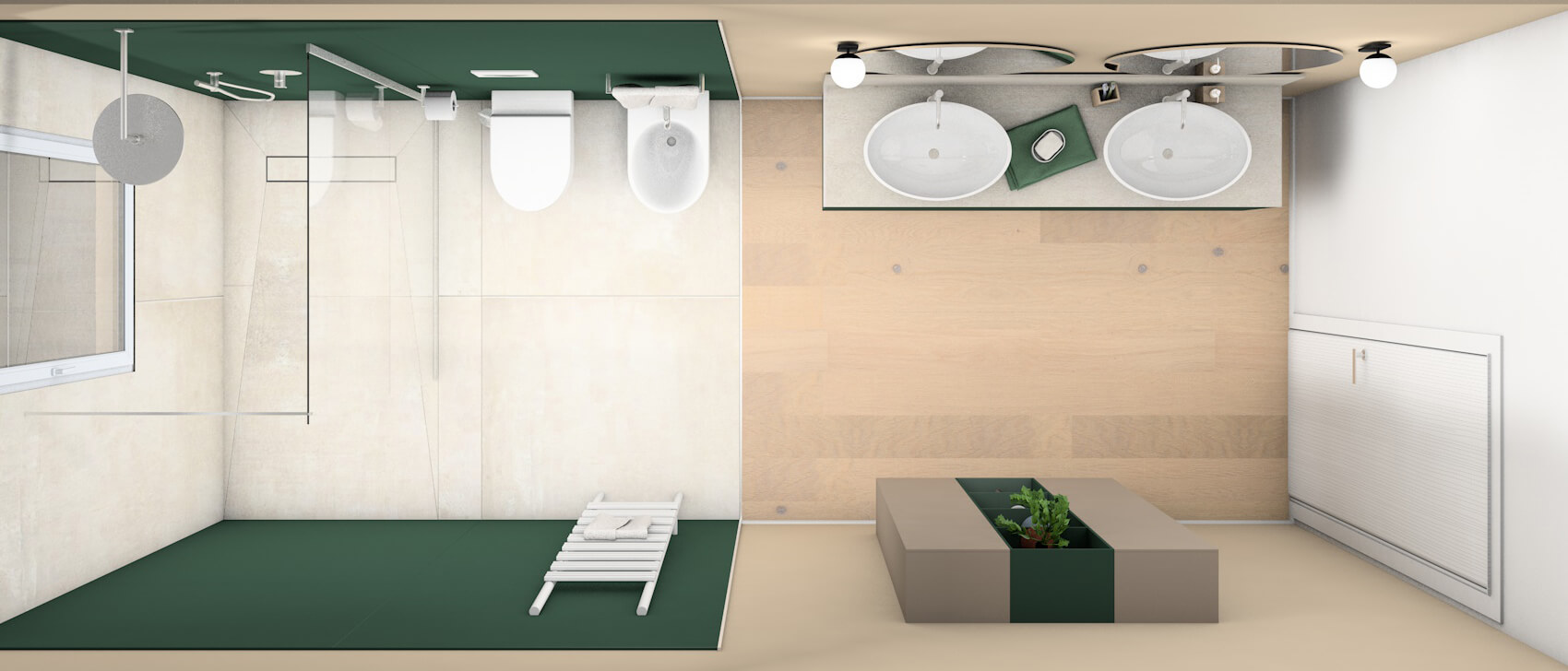
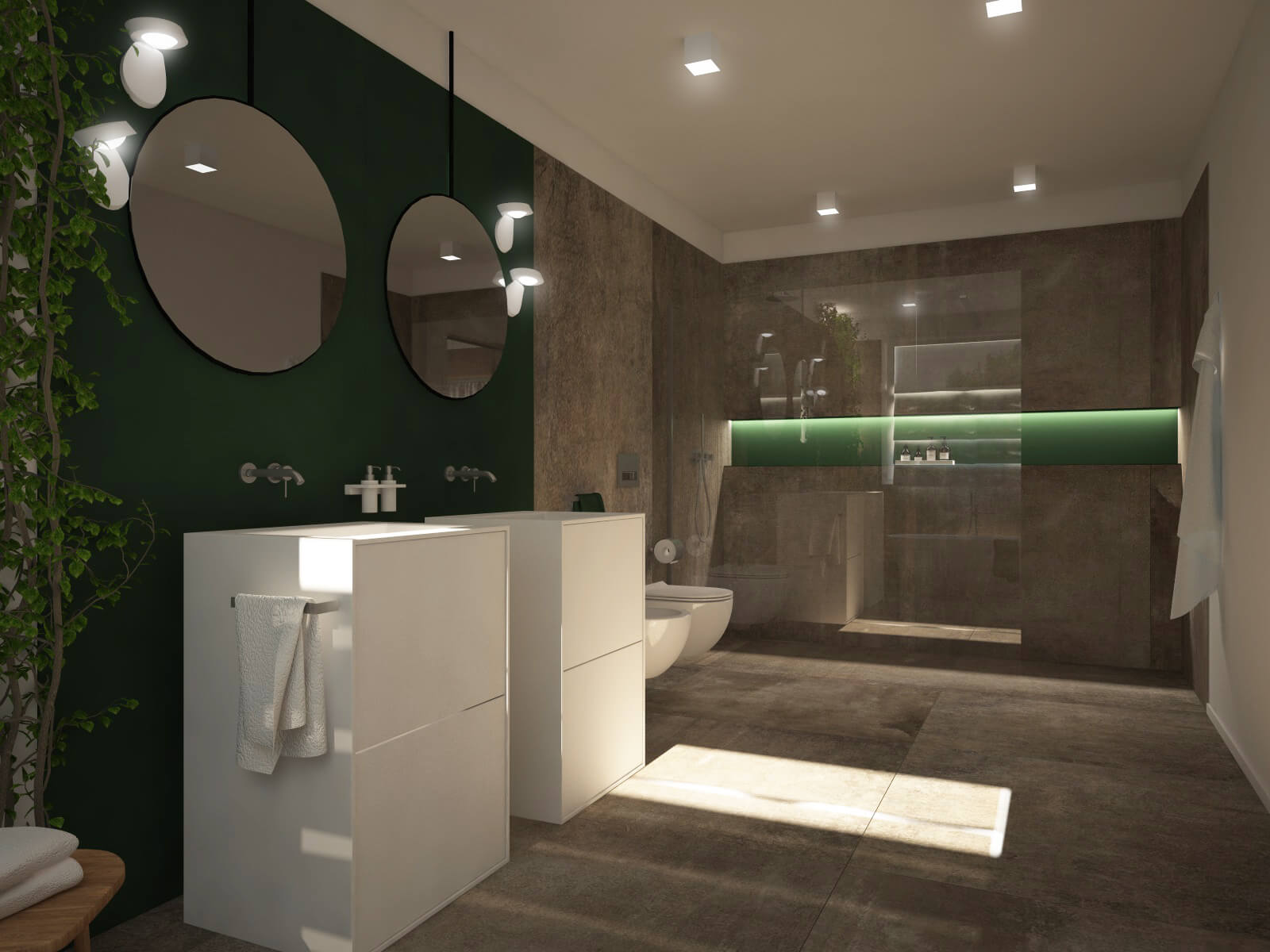
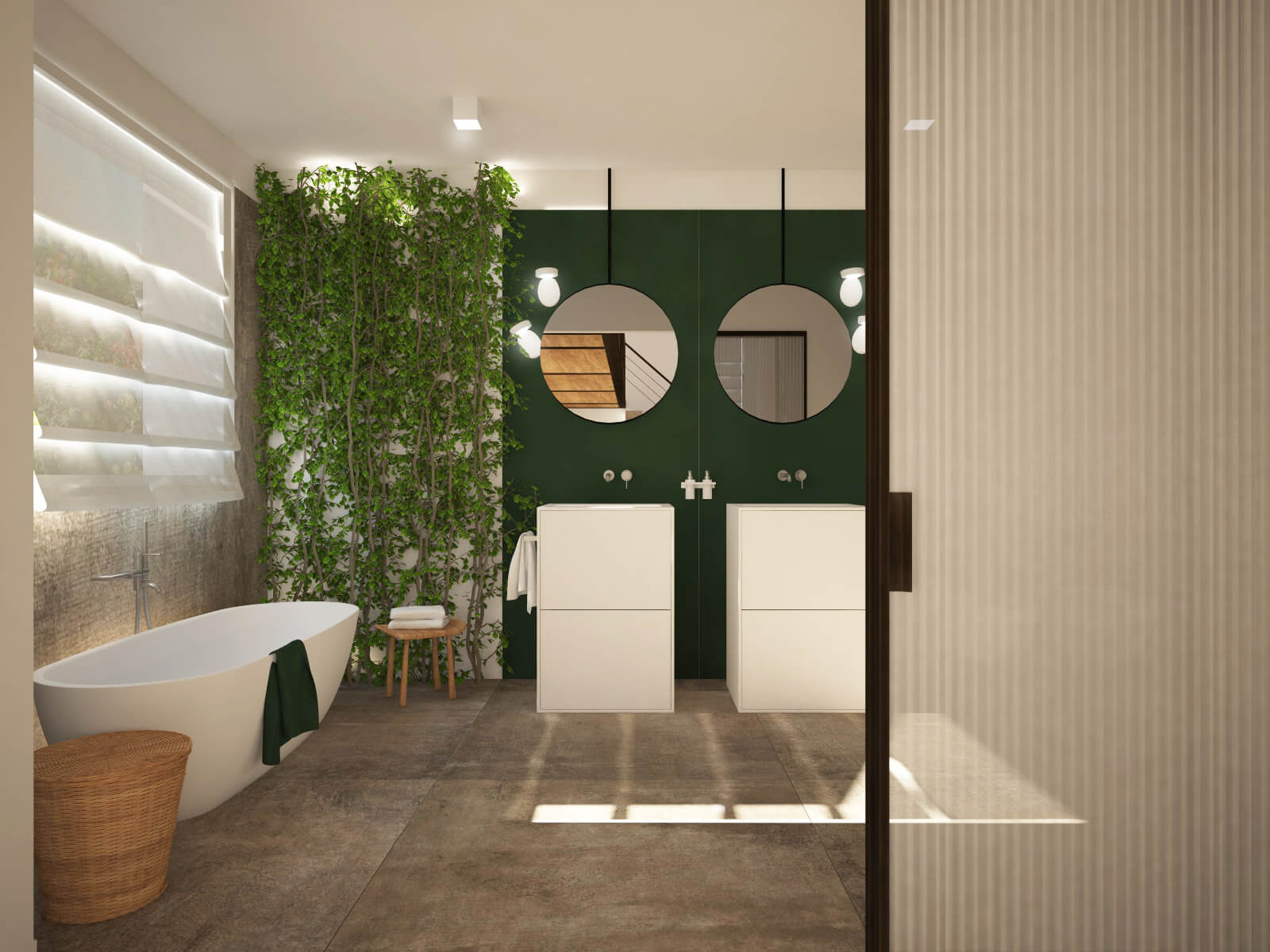
Progetto di un bagno con grandi lastre colorate
Thanks!
Thank you for reading this article. Come and visit us for a free consultation on coloured large-format slabs!
Book an appointment by writing to info@fratellipellizzari.com or by filling in the form below.
See you soon!

Contact us to decorate your home with large-format decorated porcelain stoneware slabs!
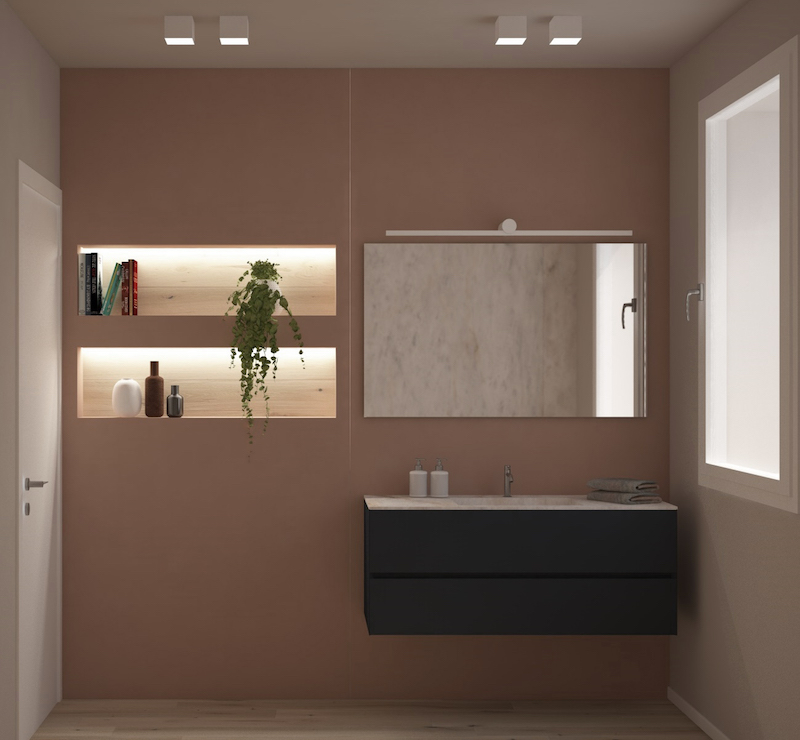
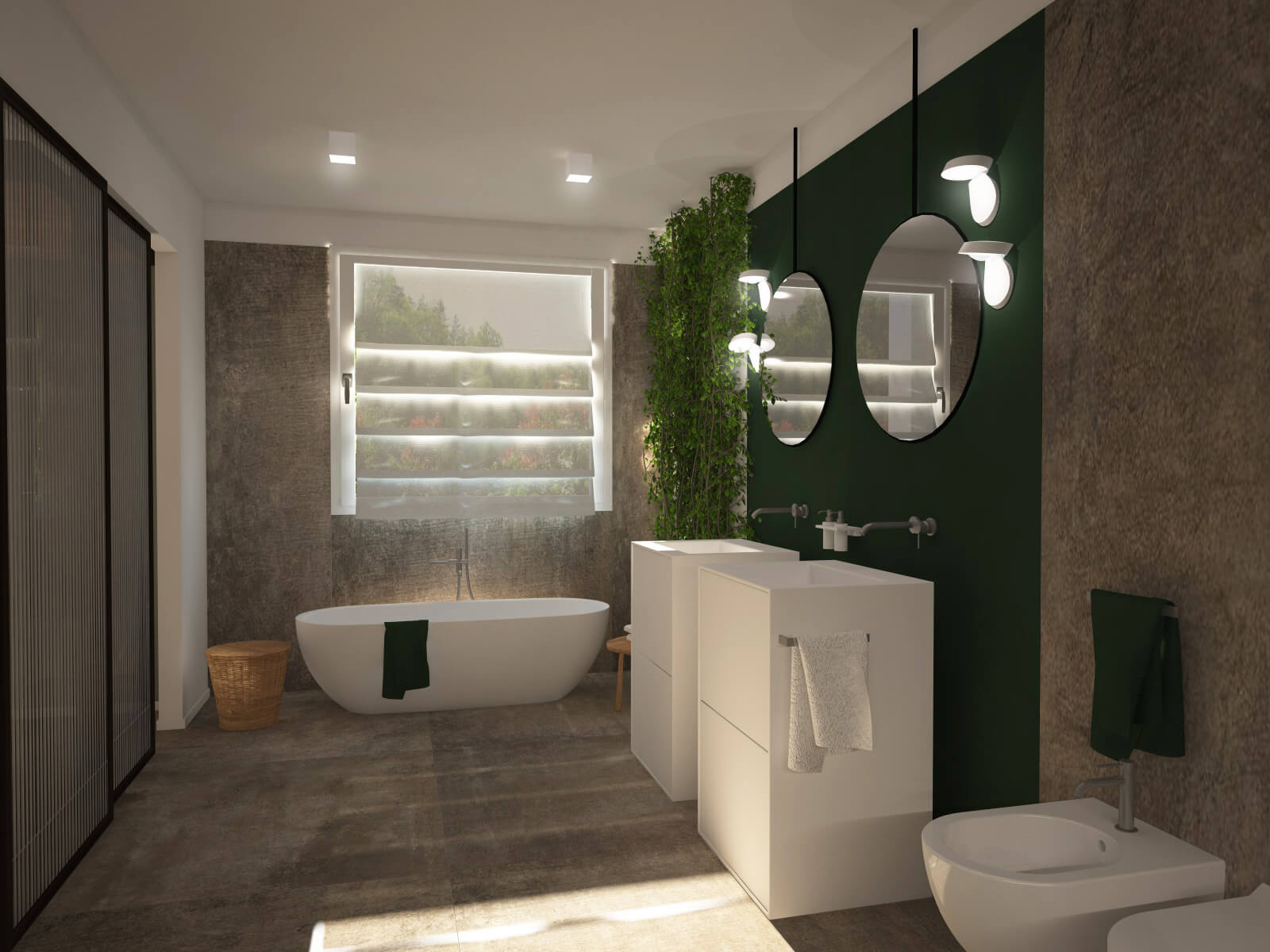
Progetto per un bagno con parete decorata con lastre in grès colorate



Commenti
Mi servirebbero delle lastre per il bagno di colore arancione; non capisco perché le ditte non producono lastre con colori caldi, ma solo con colori "freddi".
Ciao Angelo,
ti contatto via mail per darti alcune soluzioni di grandi lastre colorate.
ciao!
Aggiungi un commento